
This post was written by Samantha Mayol as a part of her 2025 O’Shaughnessy Global Food Fellowship.
Roots of Health: Tracing Agricultural Histories to Public Health in Puerto Rico
The first Saturday I went to the farmers market in Mayagüez, I was hit by the smell of abiu and sour starfruit before I even saw the rows of tables. Farmers sat behind their crates of plantains, cassava, peppers, and herbs, their hands still stained with soil. The air was alive with conversation: neighbors greeting one another, children begging their parents for a coconut, vendors calling out the prices of papayas. I walked slowly, taking it in, thinking about how the produce here seemed fuller, more alive than the imported fruits wrapped in plastic at supermarkets. Yet, when I spoke to the farmers, they surprised me. More than once, I heard the same words: “Farming here is for the poor.” It jarred me: the contrast between the abundance spread out before me and the stigma attached to the hands that grew it.
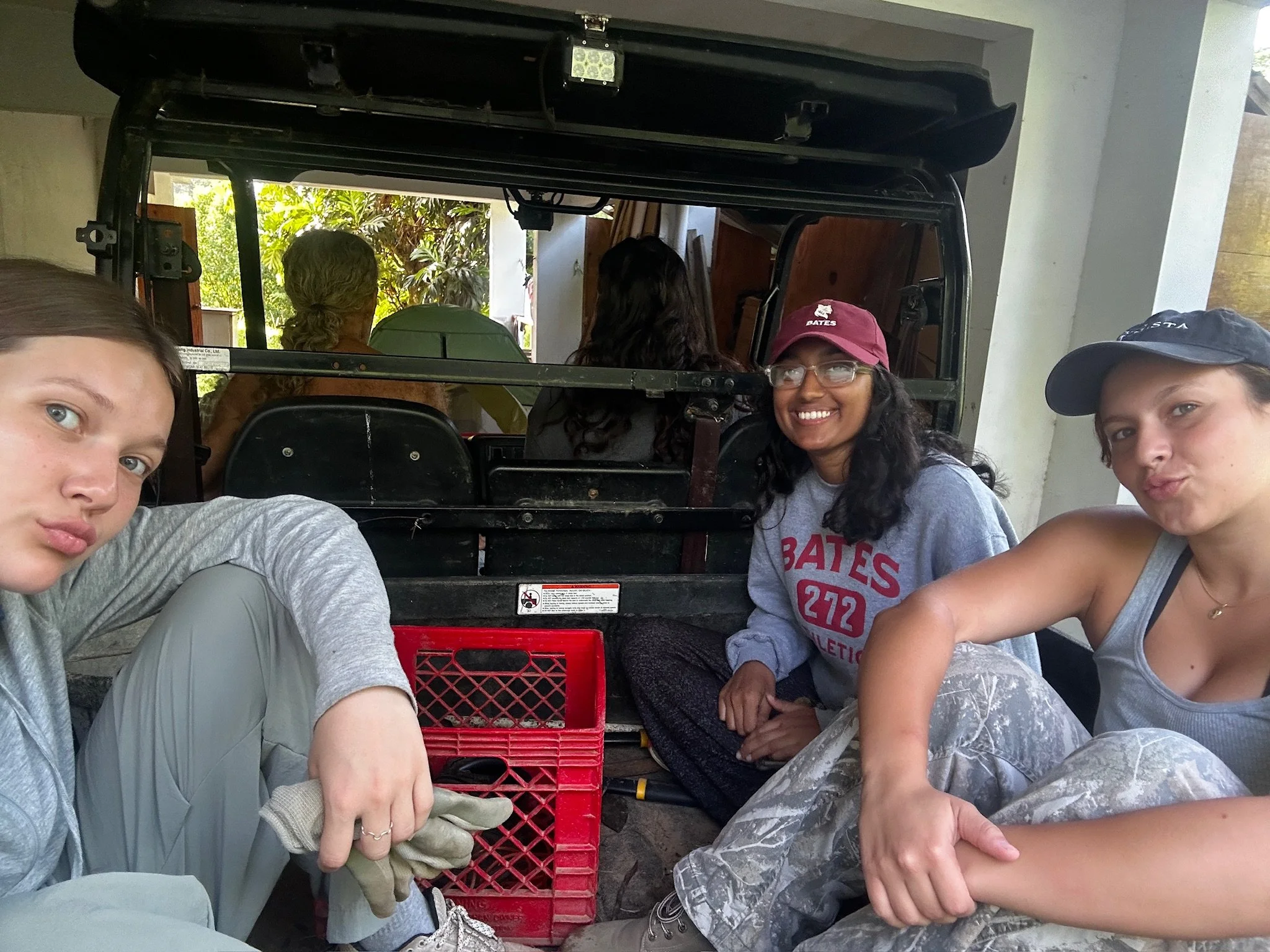
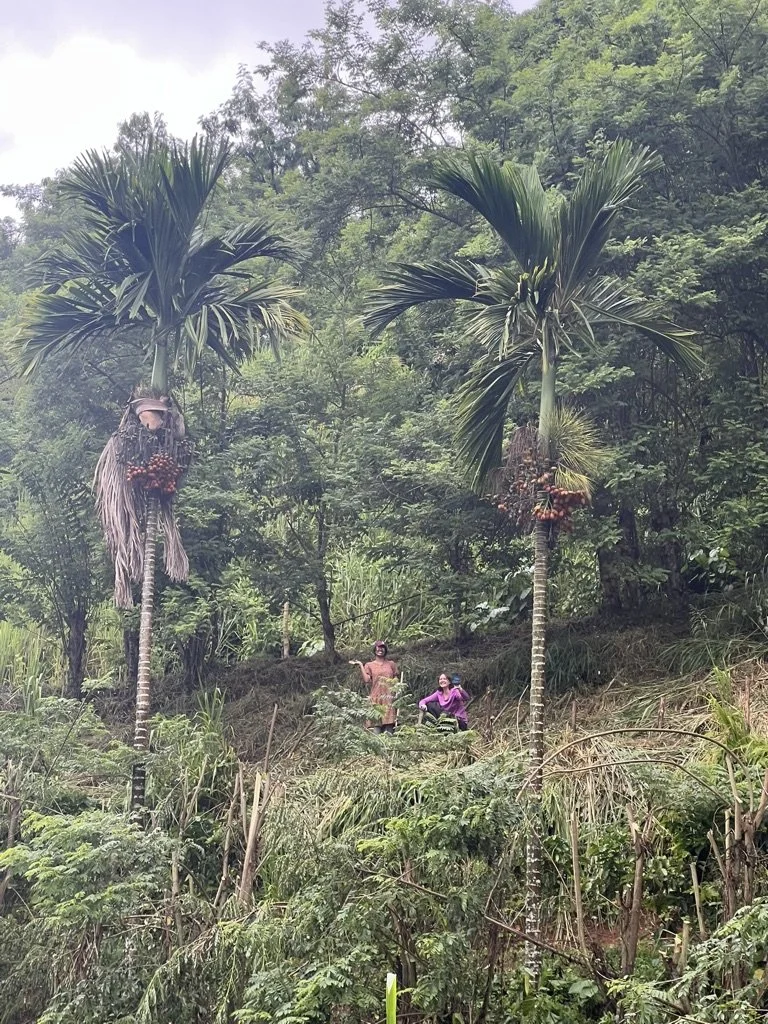
Working in the fields this past summer deepened this tension. Bent over rows of crops beneath the Mayagüez sun, sweat running down my back, I began to understand farming not as an idyllic “back to the land” fantasy but as relentless, undervalued labor. Pulling weeds by hand, I felt the ache that stays in your muscles long after the work day is over. And yet, there was also joy: watching soil crumble easily in my fingers, hearing the well-known sound of the coqui frog, feeling pride in harvesting food that would soon nourish someone else. Farming demanded humility and patience. It was work that left me both exhausted and exhilarated, grounded, both physically and emotionally, in a way I hadn’t felt before.
But in Puerto Rico, farming has long been tangled up with poverty and marginalization. At the market, when someone called themselves a jíbaro, I began to understand the weight of that word. The jíbaro, the rural mountain farmer, has been both celebrated as a symbol of Puerto Rican authenticity and dismissed as uneducated and poor. Historically, jíbaros were kept deliberately in poverty, tied to the land without access to schooling or resources. They were not enslaved, but they were trapped in cycles of labor that benefitted landowners far more than themselves. That history clings to farming today: the idea that to work the land is to be stuck in hardship, unless, of course, you are wealthy enough to choose it.
I thought often about how differently the Taíno once approached agriculture. Their conuco system, mounded plots where cassava, maize, beans, and sweet potatoes grew together, wasn’t about extracting as much as possible from the soil but about creating balance. Regenerative methods like this enriched the soil, kept pests in check, and produced a diverse, nutrient-rich diet. Standing in modern fields, I tried to imagine what these gardens looked like centuries ago: full of life, layered with crops. Compared to the Spanish-imposed monocultures of sugar and tobacco, the conucos offered not just food but resilience, a way of farming that recognized soil health and human health as intertwined.
In the lab at the University of Puerto Rico–Mayagüez, the soil samples told the same story as the fields. There, I learned that the science backed what Indigenous farmers had always known. Monocultures don’t just exhaust land, they strip it of specific nutrients. Soils repeatedly planted with the same crop lose calcium, potassium, and iron. By contrast, the conuco’s intercropping replenished nutrients naturally: beans restored nitrogen, root crops pulled different minerals from the earth, and compost enriched what was lost. Seeing the data side-by-side made it clear. What the Taíno created in abundance: diverse, mineral-rich food — modern monoculture steadily erodes. That depletion doesn’t stay in the ground, it shows up in our bodies, in the rise of chronic conditions tied to poor diet and nutrient deficiencies. And yet, Puerto Rico continues to import most of its food, grown to prioritize yield over nutrition. When I thought about the high rate of diabetes on the island and in my family, I couldn’t help but see the throughline: colonization shaped agriculture, agriculture shaped diet, and diet shaped health.
Still, I found hope in the small agroecological farms I visited. Farmers here spoke about caring for the soil as if it were kin. But they also told me how hard it was to sustain this way of farming without government support or larger markets. Regenerative practices existed, but mostly on the margins. The big farms were still monocultures, their scale making them dominant in both production and perception.
I wrestled with questions that don’t have easy answers: Should policy push large monoculture farms to transition to regenerative practices, or should it focus on scaling up the small farms already trying? Could government subsidies for land, seeds, or labor shift the balance? And most of all, what would it take for Puerto Ricans to see farming not as a symbol of poverty but as a foundation of health and dignity?
What I learned this summer is that public health cannot be separated from agriculture. Health begins in the soil. It is shaped by whether we choose regenerative methods or monocultures, whether we remember farming as survival or honor it as knowledge. For me, reconnecting with Puerto Rican heritage through this project meant recognizing that identity itself is rooted in land. Every conversation with a farmer, every Saturday at the market, every afternoon in the fields taught me that the stories of agriculture are also the stories of people: of resilience, exploitation, loss, and growth.
In Puerto Rico, I learned to hear the land’s stories. What started as a research project on agriculture and public health became a more personal reckoning with how I choose to live in relation to the soil, whether I will treat it as something to be used up or as something alive. That question followed me through lab work, where I saw how monoculture strips soil of the very minerals that traditional Taíno methods once fostered in abundance, and it lingered in the Saturday markets, where farmers offered tastings and food grown within a variety. My Puerto Rican heritage gives these lessons weight: the cassava fields, tropical fruit trees, and interwoven crops of the past are not only history, but inheritance. Health, I’ve come to realize, is woven through that inheritance: in the balance of nutrients from diverse fields, in the dignity of farmers’ labor, and in the resilience of traditions that refuse to be forgotten.