
This post was written by Asia Anderson as a part of the 2026 O’Shaughnessy Global Food Fellowship.
Growing up with a small family farm in Southern Mississippi, the State’s opportunity to promote self-sustainability and bring agricultural skills back into the public memory has never been lost on me. Fresh fruits and vegetables, and more importantly, the preservation of that special knowlege of the land have been blessings in my life. But although the State has some of the most fruitful soil in North America, historically, it has pulled the rug beneath the feet of those who have tended to it. Living in the Delta region this Summer, four hours away from my hometown, I drove through entire Counties with only a single grocery store, and discovered that most farms produced cash-crop, too far away from their neighbors to be reliable food-providers for the community. And on some occasions, one might see men dressed in green-striped jumpsuits, working in fields alongside the road. In conversations with previously incarcerated members of my family and community, I was shocked to find that none of that food supplemented the diet of prisons in Mississippi. All of that land, in one of the hungriest States in America, with very little to show for it.
This Summer, I had hopes of understanding the cycles of production and circulation of crops in the Carceral Food System. What began as a process of illumination, became a frustrating series of dead-ends and disappointment. Still, while conducting interviews, I’ve met many determined people aiming to end our current system - who hope to influence prison healthcare policy and to improve or abolish MDOC’s agricultural enterprises. My hope is that the state will one day amend its constitution so as to exclude the clause that deems slavery permissible as a punishment for a crime.
-
Last week, members of the farm crew at Mississippi State Penitentiary (MSP) celebrated a summer harvest of nearly 100,000 pounds of watermelon from the prison’s fields. Superintendent Frank Caswell praised the hard work of the crew, saying that “each watermelon harvested represents hard work, responsibility, and a chance to learn skills that can make a difference in the future.”
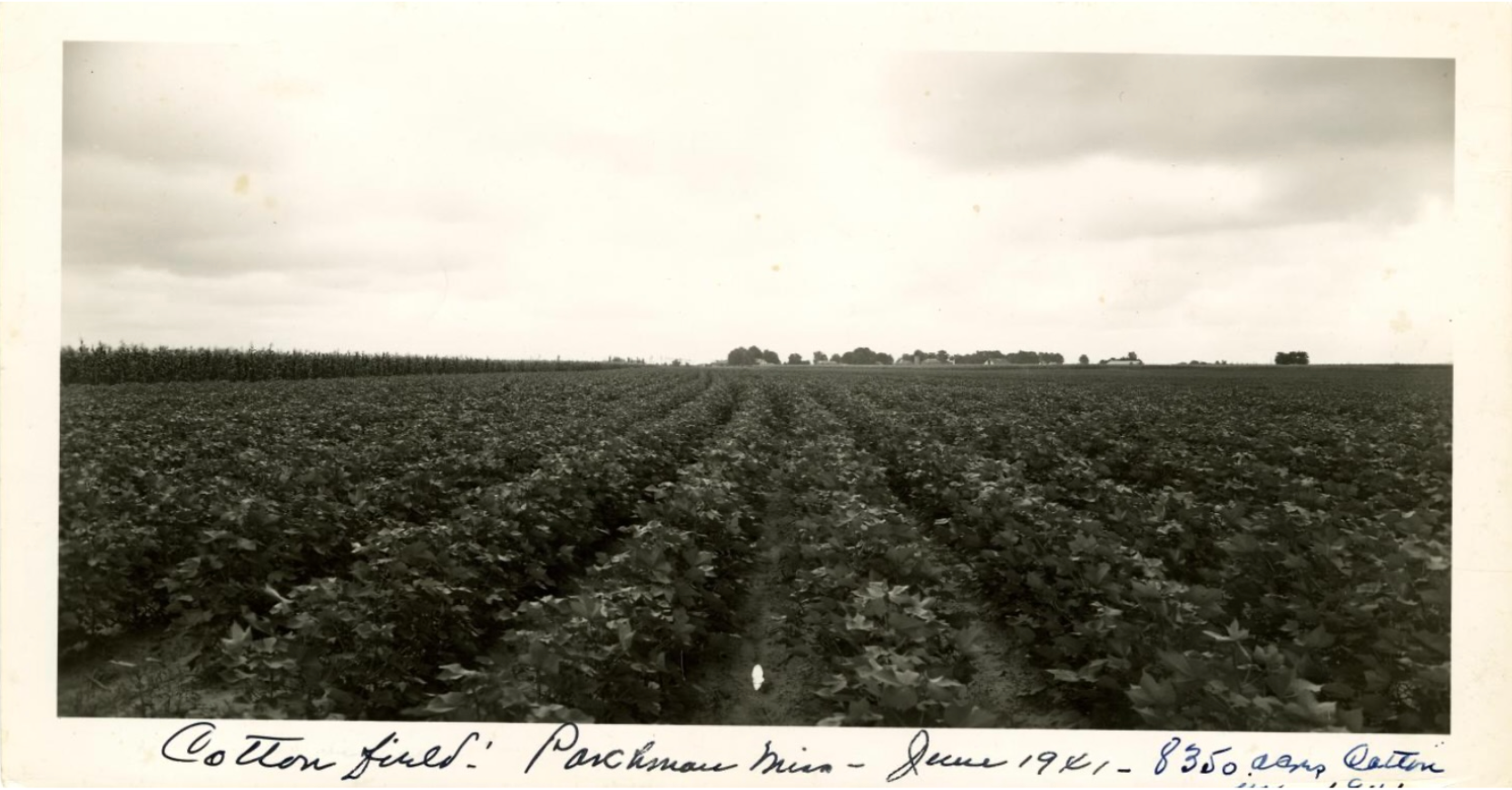
Temperatures in Sunflower County, Mississippi, where MSP is located, climbed past ninety-five degrees by noon each day, with a feels-like estimate of over one hundred degrees. Hard work indeed, especially within a state that does not provide compensation for inmate labor. The reward is an eighth of a watermelon, which will be one of very few times that fruit is served in Mississippi State Penitentiary, also known as Parchman Prison. How could a prison with more than 18,000 acres of fertile soil provide so little for the people who are made to work on it?
This Summer, I returned home to Mississippi to understand the state’s carceral food system with respect to its penal farms, commonly known as “prison farms.” Prison farms are exactly as they sound—extensive acreage attached to private correctional facilities across the state, and prisons across the nation. These farms exist to reduce idleness by engaging inmates in physical labor: harvesting crops, raising livestock, and performing industrial labor; a precedent set by the 13th amendment’s penal exception clause:
It states that neither slavery nor involuntary servitude shall exist in the U.S., "except as a punishment for crime whereof the party shall have been duly convicted".
While many states have amended their constitutions to exclude this clause, others find a way to justify it. Mississippi in particular proposes a model of “self-sufficiency” fueled by prison labor. While my state hasn’t practiced convict leasing, or the leasing of incarcerated peoples’ labor to companies for profit, since the 1890s, the nature of labor on penal farms has still proven itself to be inhumane. As per Mississippi Department of Corrections’ (MDOC) rules on Agricultural Enterprises, penal farms exist to keep kitchen costs low, and trade idle-hands for skilled trades with the expectation of employment post-incarceration. But, when I spoke to Mississippi’s Representative Becky Currie, registered nurse and Chair of Corrections, she told me that MDOC has floated roughly five million dollars annually, with little to show for its agricultural production and post-carceral employment rates :
“If you add what we lose with MagCor on top of what we lose with the prisons, it's just an enormous amount of tax dollars, and it’s not fair to the taxpayers for them to play farming,” she said.
Still, MagCor, the nonprofit corporation that oversees prison labor, along with MDOC, insists on continuing agricultural operations.
“I have eaten their lunch,” Currie recounted her visit to Parchman to take notes on crop production and preparation. “I do know that the meals are terrible for them, health-wise.”
There were only enough turnips and cabbage grown on the property for a few side dishes, not nearly enough to feed the 2,000 inmates housed at Parchman. Not nearly enough to supplement or counteract the effects of what Currie described to be starchy meals, full of sodium. By the end of the Summer, I found that the role of Mississippi’s prison farms in creating “self-sufficiency,” is more than unprofitable; it is dehumanizing. Looking beyond the farm and into prisons cafeterias across the state, Mississippi’s carceral food “system” seemed to fail every step of the way: in rehabilitation, in nutrition, and in preserving the dignity that all people deserve.
In 2018, the Currie’s legislative committee, PEER, reported that MDOC spent $2.89 a day on food for inmates, which MDOC Commissioner Burl Cain justified by claiming that crop production would supplement the meals. He made this claim when he was the Warden at Angola, Louisiana’s state penitentiary, where he allocated only $1.41 a day for food. Through conducting interviews with Parchman Prison’s chaplain, an officer who oversaw field work, and a man who held a medical doctorate prior to incarceration, it quickly became clear that very little existed to supplement the food served in Mississippi prisons.
Rehabilitation
Her accounts were not unlike those of the other interviewees, one of whom held a medical doctorate before incarceration. He has requested that I maintain anonymity.
He was diagnosed with pre-diabetes before serving his five year sentence in Holly Springs, Mississippi.
“The attitude of the Mississippi prison system, regarding food, is that they have an obligation to provide 3 meals a day that meet some [nutritional] standard that hasn't been very clearly disclosed . The meals tend to be very carb heavy. There's a pandemic of obesity within the Mississippi prison system, and the food is contributing to it,” he said.
When I asked him whether he was able to request an alternative tray for his medical condition, he explained that there were no alternative trays. Not for people with diabetes, kidney failure, people who needed double-portions, etcetera. There was only a bland tray, which contained the standard menu, but without seasonings.
“There is no diabetic diet for diabetic patients, and that's another growing population within the prison system. The only response the system has is to put people on medications. And so instead of modifying diet and focusing on a diabetic friendly tray, trying to maintain weight or, or reduce weight gain for individuals, is really just pushing medications.”
He continued, “So, you know, I was basically just living to get through prison to know that I could take care of my health when I got out.”’
Two interviewees spoke specifically about the quality of the food they ate during their time spent in prison.
Food was stamped with “For Institutional Use,” standard packaging that does not mandate the disclosure of nutritional labeling on individual packaging, preventing individual retail sale. All meat was blended with soy and labeled “meat-flavored patty,” and all while being called “chicken” on the prison menu.
Maurice Clifton Sr., who was previously the Chaplain of Parchman Prison, and previously incarcerated in Mississippi and Texas’ federal prison system witnessed a far more blatant disregard for dignity in the prison kitchens. He routinely watched staff prepare frozen food labeled “Not fit for human consumption” and serve it in such limited portions that many people would scrape the discards of others’ trays from the dish drop.
“I guess dignity-wise, they didn't care about what nobody thought about them getting food off somebody who had just, you know, ate off a tray, or whatever like that. For me, it was just pitiful in the sense that they didn't feed the person enough for him to feel like he was full for the rest of the day,” he said.
The food providers are legally required to serve 2000 calories a day to inmates. Mr. Clifton could not recall a single day, during all of his twenty-three years spent in prison, where he was given more than 1600 edible calories.
When he left the federal system and entered Mississippi State Penitentiary as Chaplain, he remarked, “I might have saw one meal to where I felt comfortable enough to sit down and share with the guys. But they had to eat that every day.”
“We had very few fresh vegetables.We had no fresh fruits. So, no fresh ingredients, with the exception of cabbage. That was the only sort of fresh vegetable that we would get in the dining hall,” he said.
He received fresh fruit two times a year: three apples on Christmas, and an eighth of a watermelon on the Fourth of July.
Throughout my project, I was guided by a quote from Historian David Oshinsky’s Worse Than Slavery: Parchman Farm and the Ordeal of Jim Crow justice (1995):
Oshinsky quotes the Superintendent of Parchman Prison in 1957:
“We realize that our farming is excellent and is very necessary, but our young men whom we are responsible for rehabilitating, need something more than a plow or hoe. Which is more valuable, a bale of cotton or a citizen returned to society?”
Oshinsky continues, saying that nearly every man who walked into Parchman as a field worker left the same way. But today, it’s difficult to say what people walk away with when they leave the institution. This model of “rehabilitation” relied on the pre-existing skills of poor black sharecroppers during Jim Crow. As knowledge of land and agricultural skills leave the collective memory of many Mississippians, MDOC finds that it must take on more responsibility to teach and truly offer people rehabilitative skills. It is a responsibility they are unwilling to take on, despite having ample resources and legislative orders to do so. In seeing MDOC’s report, featuring dozens of men, sweating in the Mississippi heat, holding watermelons above their heads and on their hips, smiling, I am not struck by the possible rehabilitative value of this harvest.
As I drive through the Delta for hours on end, burning through gas to try and capture on video the boundlessness of un-occupied soil, owned by the State to “play farm,” as Currie appropriately called it, I let my AC blare in what feels like over 100 degrees. There are men in green-striped jumpsuits working outside with the road commission, straightening up rows of cash-crop or a couple of vegetables that may never make it to their plates.
The Superintendent's remark from 1957 is a stain in my mind:
“Which is more valuable, a bale of cotton or a citizen returned to society?”
Still, I’ll keep an eye on the work of prison reform advocates like Sr. Maurice Clifton who continue to testify and support re-entry programs that truly aim to rehabilitate - and the work of Representative Currie, who is bringing legislation regarding Inmate Healthcare and Welfare Oversight back into conversation this year, with the ultimate aim of shutting down Parchman’s farm operations as they currently stand.
Conclusion
I’ve compiled a series of interviews, footage of Parchman Farm’s acreage, of surrounding scenery, and images of Parchman from the Mississippi Department of Archives and History from the late 1800s to 1900s in order to create a short video, which I hope to build on as i move forward with my project beyond the Global Food Fellowship.