
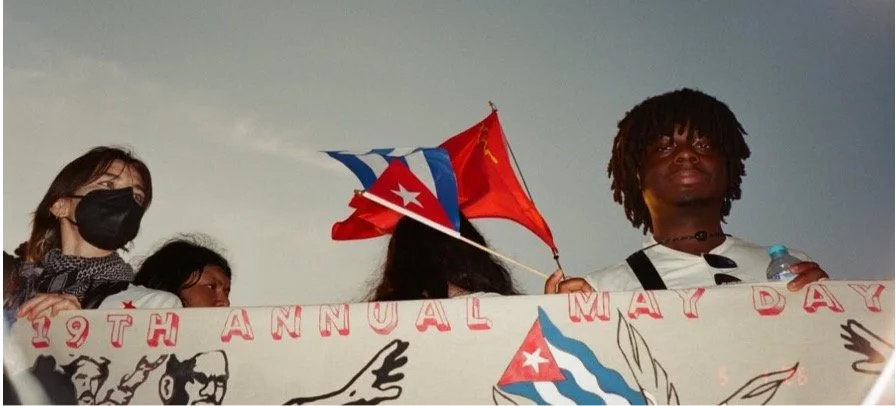
This post was written by Han Pimentel-Hayes as a part of the 2026 Lazarus Summer Internship.
I am a strong opponent of the tired, old adage that “comparison is the thief of joy”. I could never be convinced that I should remain satisfied and unquestioning with my own position in life–that I should not look around to see how others around me are faring. Could they be doing better? Could I? It isn’t just the egalitarian thing to do—to ensure that the conditions I enjoy can be enjoyed by others, or demand for myself the conditions that others enjoy. It’s the strategic thing to do. I could never be convinced that I should keep my eyes on my own paper—that we shouldn’t compare our ideas and methods. How else are we to imagine realities beyond the one in which we are currently embedded?
Imagination is facilitated by the power of comparison. This is what the Yale Farm has offered to me this summer. Alongside my fellow Lazarus Summer Interns, I investigated differing agricultural theories and models throughout the United States. Of course, we dedicated time to reading—to defining and re-defining—critical concepts such as food sovereignty. Our readings provided foundational concepts to ground our understanding of the work we were doing. But we had to do the work. We had to have the practice. We needed to see the concepts and theories come to life. So, we spent time tending to young heirloom tomato plants at Massaro, New Haven County’s own organic community farm. We traveled north to Massachusetts, exchanging seeds with the Nipmuc-stewarded Pequoig farm, which was born out of an 181 acre land-back initiative. We even braved Merritt Parkway to witness the long-lashed latina avocados dancing for American consumers in the produce section at Stew Leonard’s. Even the things that are ugly are an essential part of the compare and contrast. What do you want to see in your world? What don’t you?
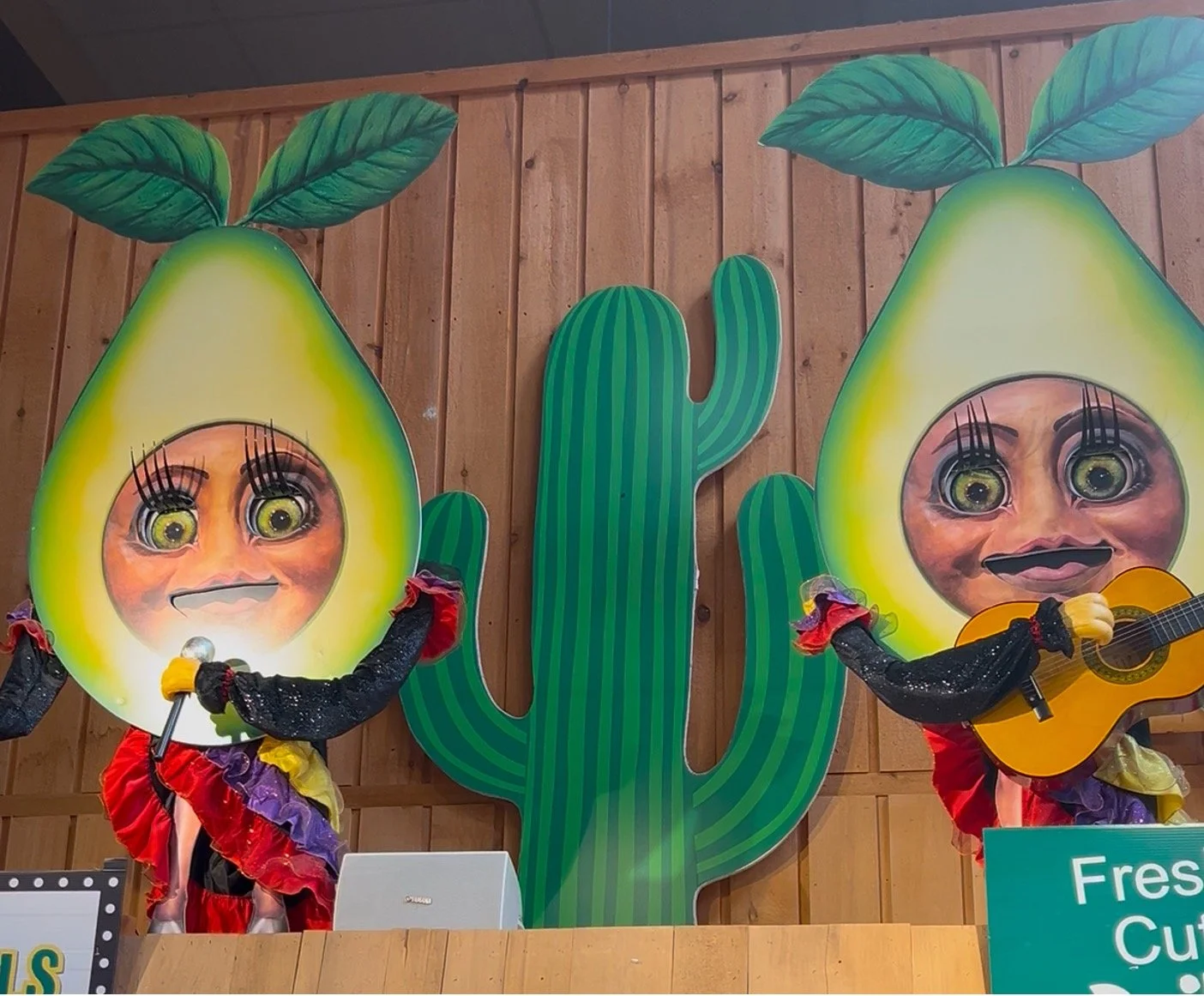
Long-lashed avocados dancing for American consumers.
As I thought about the necessity of imagination and the value of comparison, I began to consider the other experiences in my life that had broadened my realm of possibilities, particularly as they pertained to food and agriculture. I thought of Cuba. This past spring, I traveled to Cuba with the May Day Brigade. We collected material aid to distribute to the Cuban people, who have long fought for economic, political, and cultural survival in the face of the suffocating U.S. blockade. But the trip was a two-way exchange of ideas, alternatives, and imaginations—political, economic, and agricultural. Only two weeks separated my return from Cuba and the beginning of my internship as a Lazarus Fellow. So, I processed much of what I had witnessed on the island through the concepts and practices I learned at the farm.
At the beginning of the Lazarus Summer Internship, La Via Campesina introduced me to a new definition of food sovereignty–one that stretched beyond a food security framework to include cultural, economic and political elements. For example, La Via Campesina asserts that food sovereignty does not solely entail access to food, but access to food that is culturally relevant. Additionally, the movement foregrounds the labor of landless peasants, noting how the working classes have historically been “denied access to and control over land, water, seeds and natural resources”.
I immediately recalled the series of agrarian reforms that reshaped Cuba in the early years of the revolution, beginning in 1959. Prior to the triumph of the revolution, Cuba functioned as one massive sugar plantation and an illegal gambling paradise for wealthy Americans. In their domination of agricultural production, these corporations and foreign entities dominated economic, cultural and political life. Over 80% of the land was privately owned while Cuban people endured dispossession, starvation and violence. In their manifesto, La Via Campesina identifies this domination as part of a larger historical pattern of extraction, naming the global capitalist system as the "inequitable system that treats both nature and people as a means to an end with the sole aim of generating profits for a few.” During my stay on the island, I met with workers from agricultural cooperatives, who described both the ecological destruction caused by widespread monocultural production and the economic, social, and political destruction wrought by the previous domination of foreign entities and capital. However, following the immediate success of the revolution, the land was seized from foreign capital. Much of it was redistributed to landless peasants and cooperatives, who then collaborated with state agricultural projects on a new agenda that prioritized the people.
State regulations reflected the people’s desire for cultural, economic, and political autonomy, and acknowledged the necessity of food sovereignty in order to achieve these aims. In his 1959 speech “The Social Aims of the Rebel Army”, Che Guevara emphasized the urgency of “the creation of a vast internal market and crop diversification”, labelling these goals as “cardinal objectives” that “cannot be postponed since they involve the people's interest”. Che not only understood the urgency of feeding the people, but that a nation dependent on imports would be subject to political compromise and interference. Farmers and newly-founded cooperatives shifted away from monocultural sugar production and into diversified food operations. The new agenda sought to feed the people, as opposed to feeding the profits of the corporate monopolies that had once dominated the island. Both Che and La Via Campesina understood food sovereignty as inextricable from cultural and political sovereignty.

Venceremos: “we will win”. Popular slogan of the Cuban revolution. Indigo dye day project.
Today, Cuban cities produce much of their own fresh food, reducing transportation costs and import dependency while increasing local food access. By the early 2000s, more than 50% of the fruits and vegetables consumed in Havana were produced within the city itself. Meanwhile, small farmers nationwide control about 25% of agricultural land and produce roughly 65% of the nation’s food, demonstrating that small-scale farmers can be highly productive when given access to land and organizational support. Furthermore, this productivity does not have to come at the expense of ecological health. Cuba has understood ecological health as foundational in the pursuit of food sovereignty. Previous monocultures had degraded soil quality and disturbed ecosystems in a manner which required heavy usage of pesticides and fertilizers. By the 1990s, Cuba had reduced their usage of pesticides and fertilizers by approximately 72%, minimizing dependence on imported chemicals and instead developing sustainable agroecology methods decades before sustainability became a global policy goal. My visit to Cuba allowed me to witness the direct impacts of these revolutionary agrarian policies. I spoke with the urban farmers, who explained their policies of sharing machinery within the cooperative as we sat under their fruit trees and split fresh guava with our thumbs. While weeding raised beds, I’d pause to watch Cuban vireos flit between plantain at the edge of the field. However, I also witnessed the devastation caused by the sweeping U.S. blockade.
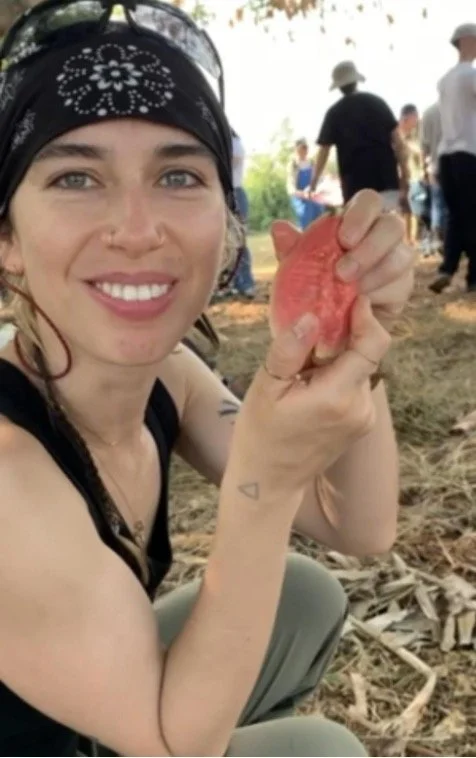
Enjoying fresh guava post-workday.
The initial triumph of the revolution in 1959 marked a major loss for United States economic interests. Additionally, Cuba poses an ideological threat to the United States, just 90 miles from the coast of Florida. Cuba offers alternatives—social, political, and agricultural—to the ecologically destructive and socially oppressive capitalist world order. Consequently, the United States has long promoted interventionist policies, including the total economic blockade that has prevented other nations from trading with Cuba for 60 years. These policies are clearly outlined in the 1960 Mallory Memorandum, which plainly stated the United States’ intention to “[deny] money and supplies to Cuba, to decrease monetary and real wages, to bring about hunger and desperation and overthrow of government”. The popularity of the revolution has historically made direct intervention a huge risk, and so the United States has sought to starve the Cuban people in order to crush the revolution. The policy—which even restricts trade of food and medicine—is nothing short of genocidal. Despite the nation once boasting an infant mortality rate lower than the United States’, the infant mortality rate has risen 148% since 2018 alone. In efforts to direct scarce resources to priority sectors such as healthcare, food, and education, trash collection has all but ceased, allowing for waste accumulation in streets. What is happening in Cuba—what is being done to Cuba—is of great concern to the doctor, the teacher, the farmer, and the environmentalist alike. And the relentless sixty-year blockade broadcasts a warning to other nations dependent upon food importations or the exportation of monocultures to Western nations:
If nations that are not food sovereign refuse to "play ball" with the United States, they may similarly face famines manufactured through economic embargoes.
The United States assumes that they can deprive and systematically murder the Cuban people in order to regain political and economic control of the island. However, the assumption that Cuban people can be starved into submission is built upon food security frameworks that frame food as little more than a commodity. Our final week of reader discussion built upon La Via Campesina’s idea that food sovereignty extends beyond food security frameworks which view food as mere commodity. In "Environmental and Food Justice", Devon Peña argues that food is "more than just a nutritional commodity, but rather a set of social relations and cultural practices". Therefore, “there can be no sustainable agriculture without cultural survival and political autonomy". For Peña, the word “sustainable” does not solely implicate ecological practices–political, social, and economic autonomy are foundational for truly sustainable agricultural projects. Cuban agrarian policies demonstrate an understanding of this fact.
Individual farmers and cooperatives wield real political decision-making power, with over 300,000 farmers belonging to the National Association of Small Farmers. The federation directly negotiates with the Cuban government to set prices, develop programs and provide resources for small farmers. And just as it is understood that sustainable agriculture requires cultural, economic and political autonomy, it is similarly understood that there can be no cultural survival and political autonomy without sustainable agriculture. Cultural survival and political autonomy are inextricable from food sovereignty.
In the face of the devastating blockade, the people of Cuba persevere, understanding that to achieve food sovereignty is to defend the nation's right to self-determination. And so this is what has occupied my mind all summer: what can we learn from Cuba's struggles for food sovereignty in the face of increasing globalization and trade dominated by imperialist powers? How do we similarly create tiny island nations of food sovereignty within the United States, in order to resist U.S. imperialism and achieve political, economic, and cultural sovereignty from within the belly of the beast? The Pequoig Farm in northern Massachusetts strives to answer.
We journeyed to the farm to exchange kernels of serrano rojo corn for Connecticut field pumpkin seeds, but of course, we exchanged ideas, as well. The Nipmuc farmers at Pequoig Farm defined food sovereignty similarly to La Via Campesina and Peña. The farm was not simply a producer of food or medicine, but also a place of land-based education and cultural connection through agricultural production. Keely, the farm manager, repeatedly emphasized the importance of autonomy and resilience on the farm, echoing Peña's sentiments about the necessity of autonomous indigenous food systems. As we toured the grounds with Keely, we learned about the steps that the farm had taken to safeguard against supply chain collapse and cut-offs. My fellow Lazarus intern Katie and I—both fixated on food sovereignty and autonomous systems—were deeply inspired by a thresher that was manually powered by an exercise bike. We excitedly captured photos, remarking on how necessary this type of technology would be in the event that the farm lacks sufficient energy supply—a reality that Cuba currently faces under the blockade. Keely mentioned that the project was an open-source design come to life, and that the farm had similarly been looking towards Cuba for inspiration.
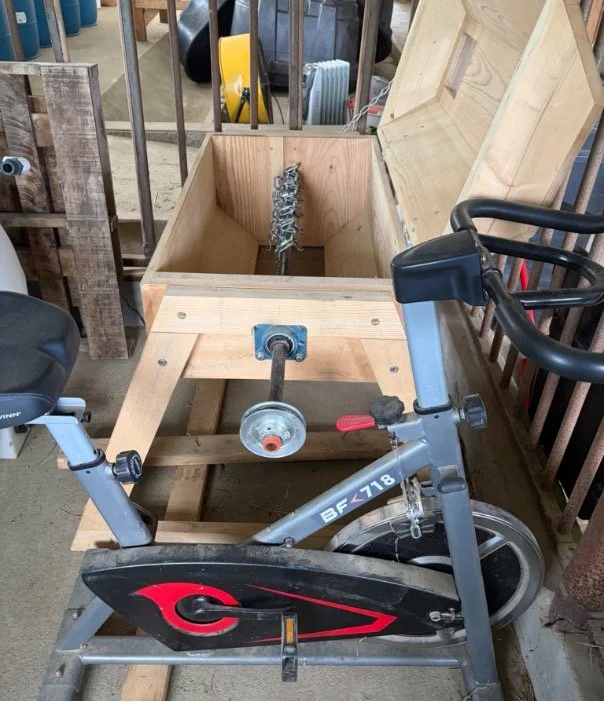
Bike thresher.
Pequoig Farm understands their position within the imperial core—a contradictory and tenuous one. The farmers understand that they cannot rely on the good graces of a violent, settler-colonial state, and that tomorrow, the farm could be cut off from the supply chain and the land could be seized upon. In order to maintain and further develop cultural and political autonomy for the Nipmuc peoples, the farm must strive for autonomous systems. I choose to believe that the workers of Pequoig understood the farm as an island of resistance within the imperial core–a place where we might not simply react to active threats, but from where we can organize offensively. Achieving this level of political power becomes more feasible when supported by an autonomous food sovereignty project that can endure the kind of economic siege that the United States currently unleashes against other nations who do not acquiesce. To the workers of the Pequoig Farm, as in Cuba, achieving food sovereignty is understood as a matter of cultural survival and political autonomy, both of which are inseparably entangled.
I reaffirm that comparison is no thief of joy. Comparison is, however, a threat to the ruling powers that rely upon ignorance and a stifled imagination in order to naturalize their domination. Comparison threatens the belief that there is no other path forward, or that the current dynamic of the world is natural and inescapable. It is not the act of comparing itself that brings dismay, but the differences in conditions that the act reveals–and maybe, too, the overwhelming realization that we have a lot of work to do. However, the United States is not Cuba, and Connecticut is not even Massachusetts, so there are no singular ideas or solutions that can be cut, copied and pasted elsewhere. Food sovereignty projects must pay particular attention to the historical and material conditions from which they arise. As YSFP’s beloved Jacquie Munno says: there are no recipes, only principles! With this in mind, I spent the summer looking towards La Via Campesina, towards the Pequoig Farm and Cuba—among many other examples—to gather principles that I believe are essential to the realization of food sovereignty, and consequently, cultural, political, and economic sovereignty. I came to understand that part of an egalitarian revolution is the achievement of food sovereignty itself, and parts of that revolution cannot happen without it.