This post was written by Sian Auer as a part of his 2025 O’Shaughnessy Global Food Fellowship.
When the People Do Not Know What to Do, They Go to the Land:
Food Sovereignty, Health, and Quiet Resistance in Coastal Guyana
I was 200 miles away from where Nicolás Maduro was captured, where nearly 100 people died, and where the United States assumed control of Venezuela.
The same United States that imprisoned Guyana’s first prime minister and corrupted subsequent elections, ushering in decades of political fragmentation under the guise of Cold War protection; the same United States that sent my family to New York Harbor, undocumented, seeking refuge; now controls Guyana’s oil industry and occupies our next-door neighbor, the world’s largest oil reserve.
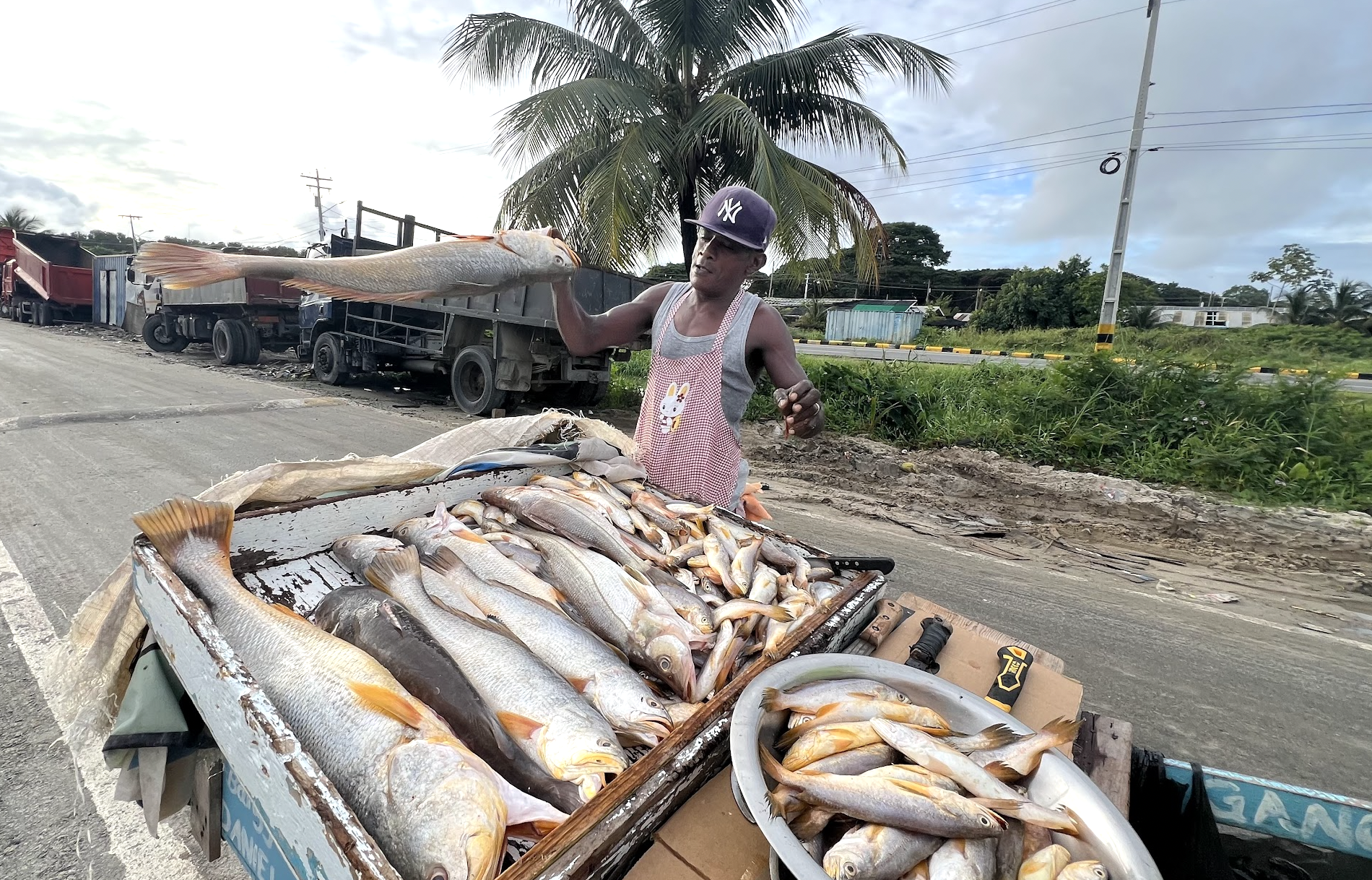
The morning of January 3rd was somber and quiet. I was awakened, as usual, by roosters and goats eager to begin their day at 5:45 a.m. Uncle Gano passed by with his fish cart at 6:30, snapper and banga merry glistening in the early light. I bought $5 worth—enough for the day— picked three limes for fish washing and lime water, then passed everything to Aunty Kamini to prepare while I went to the farm. I hugged my cousins goodbye as they left for school.
Everyone knew what had happened. In Guyana, information travels quickly—even when the internet is slow. News spreads like a giant game of telephone, passing from townspeople to traders, expedited by the actual telephones we now all now have in our pockets.
Panic was absent; awareness was not. We understood two things clearly:
We have no say in what the United States decides to do to or near Guyana next.
Regardless, the Bok choy needs watering and the pineapples need weeding.
Faced with complete geopolitical uncertainty, people turned to their land for security.
Going to the Land
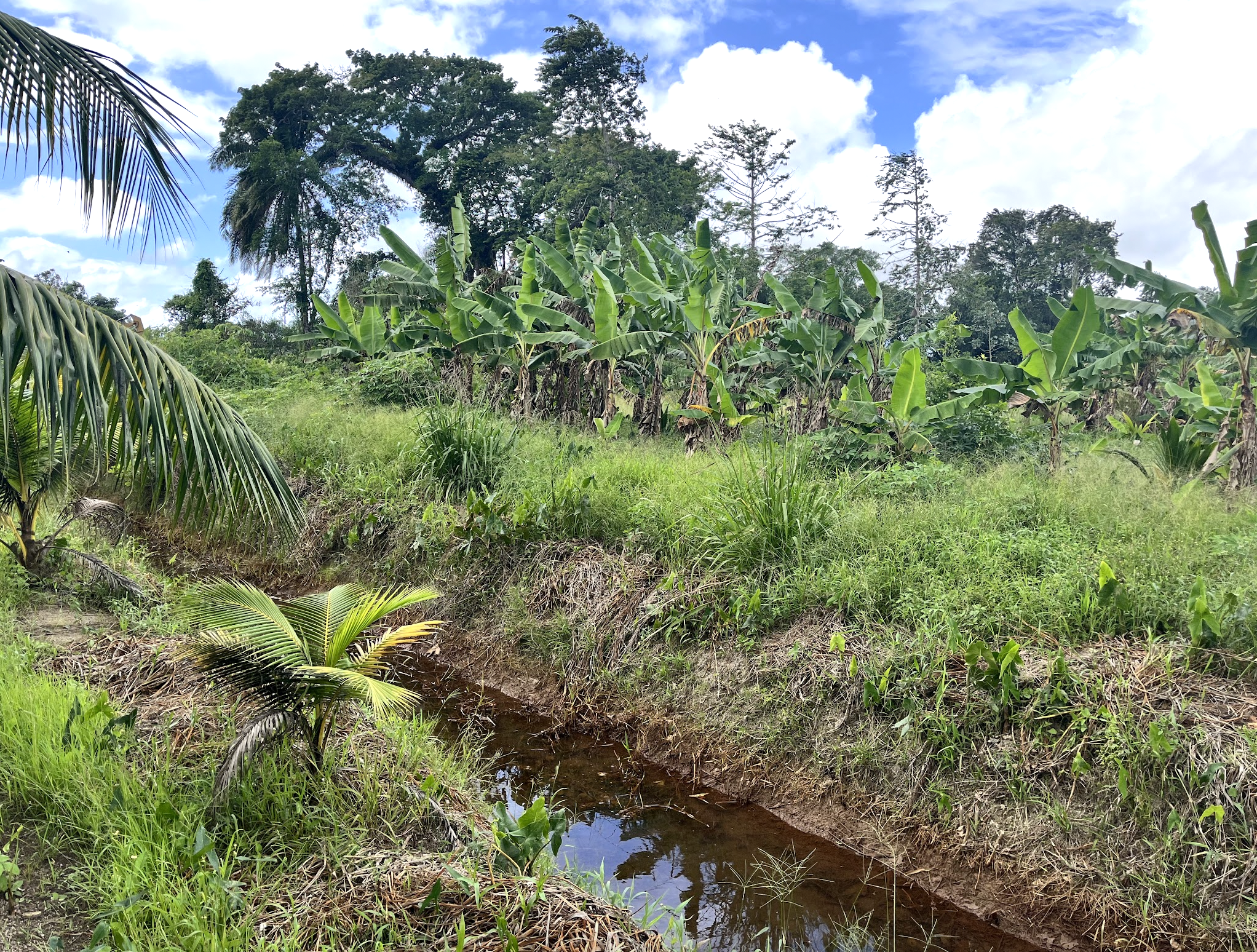
I walked into the back dam of Nana Mikey’s farm, tucked behind Demerara Canal #1. The sun was gentle; the humidity was not. I quickly sweated through long sleeves and nylon pants meant to protect my foreign flesh from merciless mosquitos. Nana Mikey handed me a cutlass and pointed toward the pineapple bushes. The grasses had grown wild.
“Time to clear this grass. It’s a watah suckah, and we nah gah nuff to go round.”
As plantations became estates, landowners planted grass to match the London lawns back home, creating a cesspool of thirsty greens competing with Indigenous flora. Foreign intervention forced Guyanese stewards to uncover different growth techniques with limited water.
“When yuh see multiple shoots coming off,” Nana said, “it’s time to prune and replant. All doze (those) fruits can’t feed on one plant.”
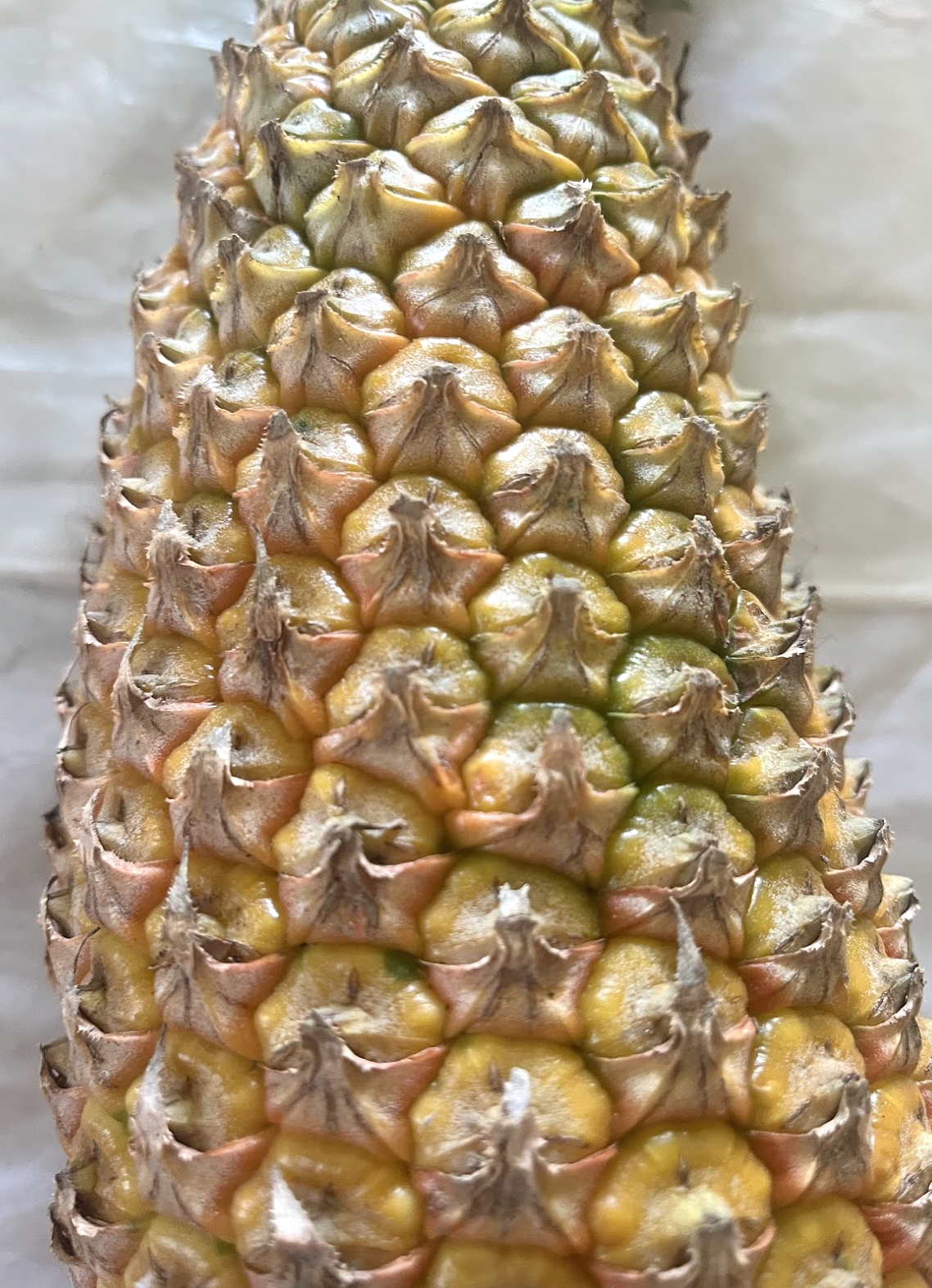
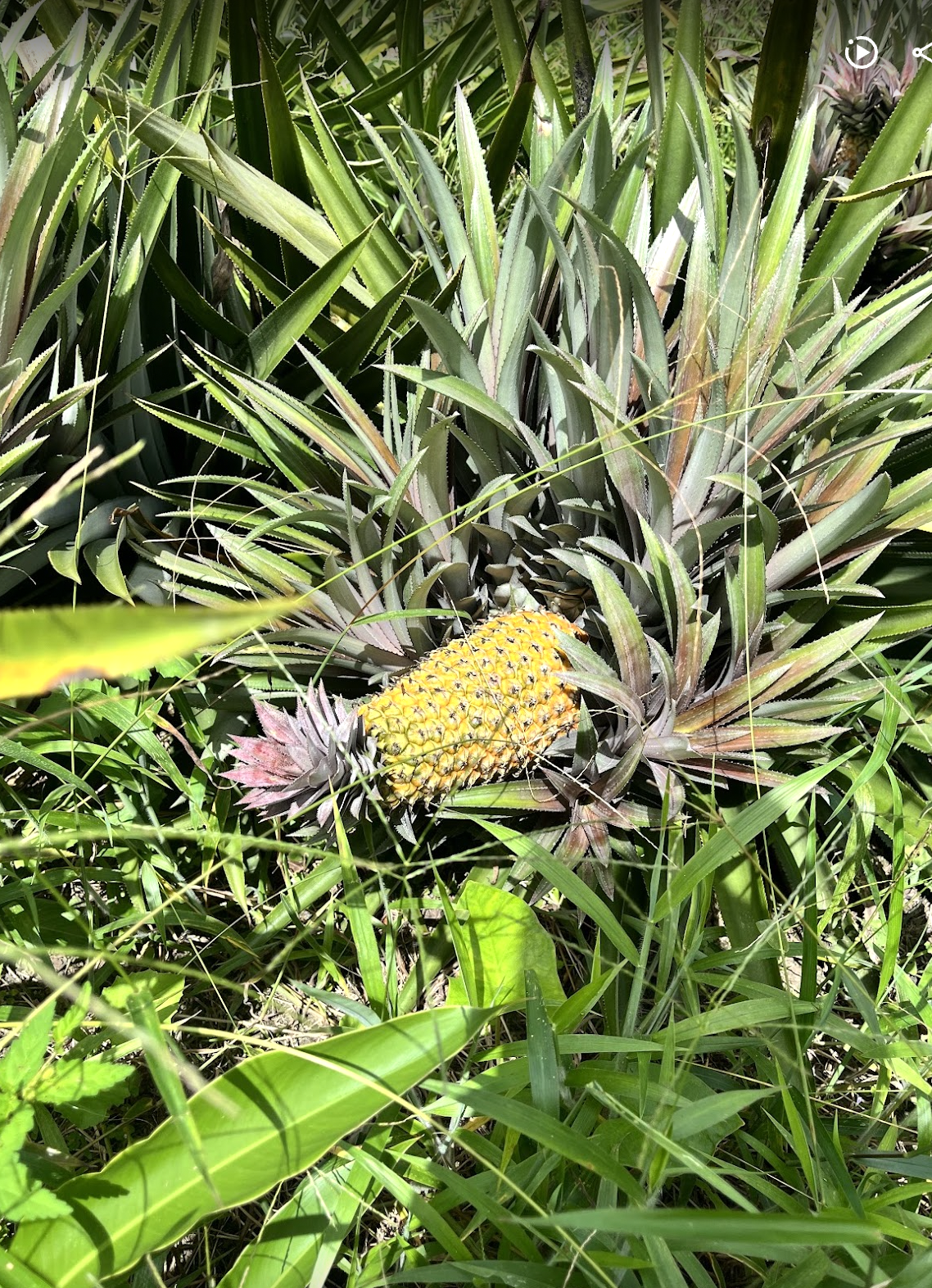
He shows me how to swing the cutlass with surgical precision, breaking the pineapple shoot at a perfect 45 degrees. We march over to a fruited bush, and he slices right through the root of the biggest, most bodacious pineapple I’ve ever seen. He flips the cutlass around and uses the back blade to trim the razor-sharp leaves.
Each diamond protrudes, forming mini valleys between each peak, almost like the sweet yellow flesh could break through the skin with a few more days of ripening. In my broken creole, I share my surprise with Nana, “Meh nevuh see pine so tick tick like dat.”
“Dis called Montserrat pine. I like it because you can really see each individual fruit.”
“What do you mean individual fruit,” I ask?
“Each diamond on the pineapple is an individual flower that gives its own berries, with the eye of each one being the fruitlet.”
Standing in Nana’s field, it seemed obvious, yet no supermarket pineapple had ever taught me that.
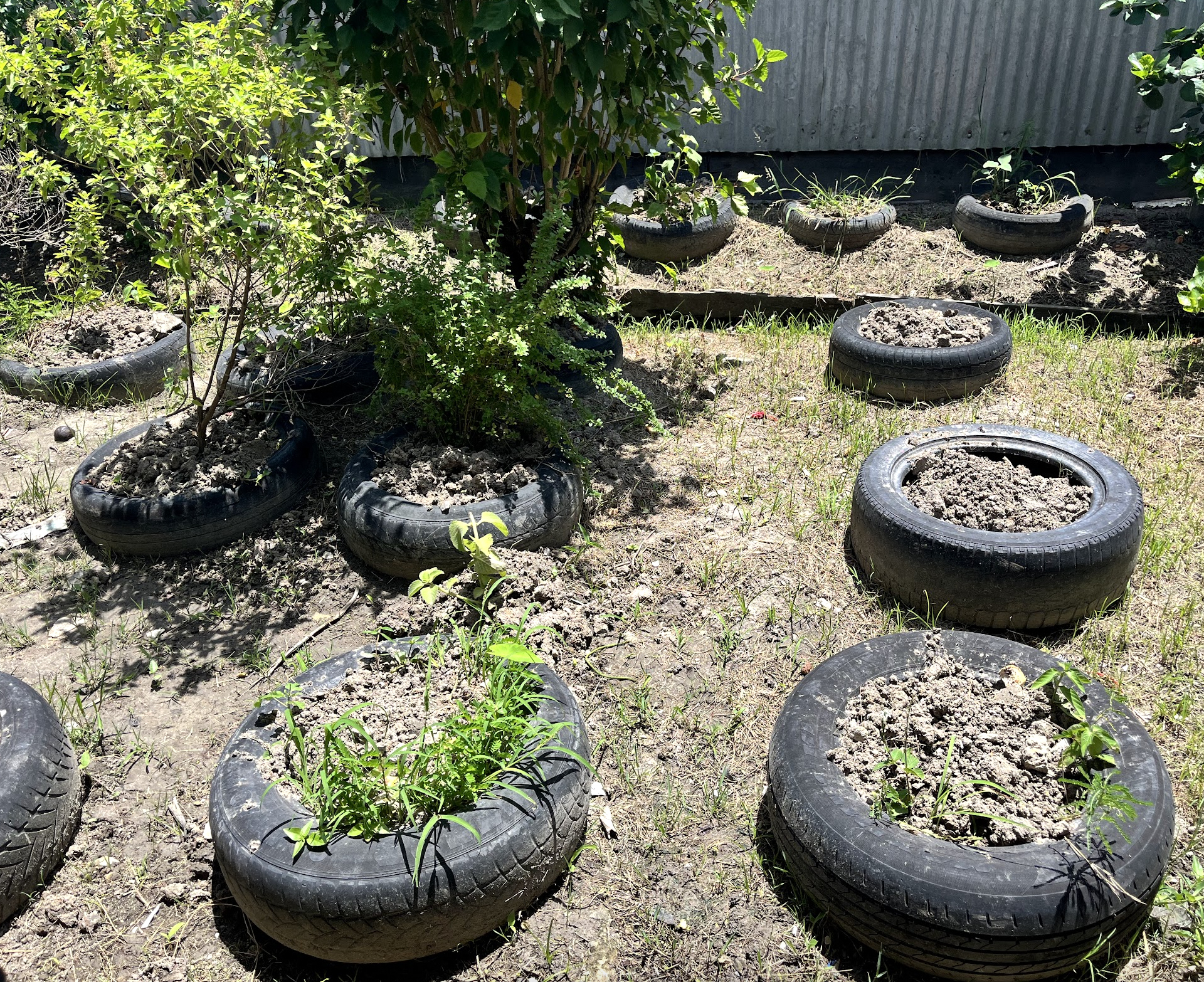
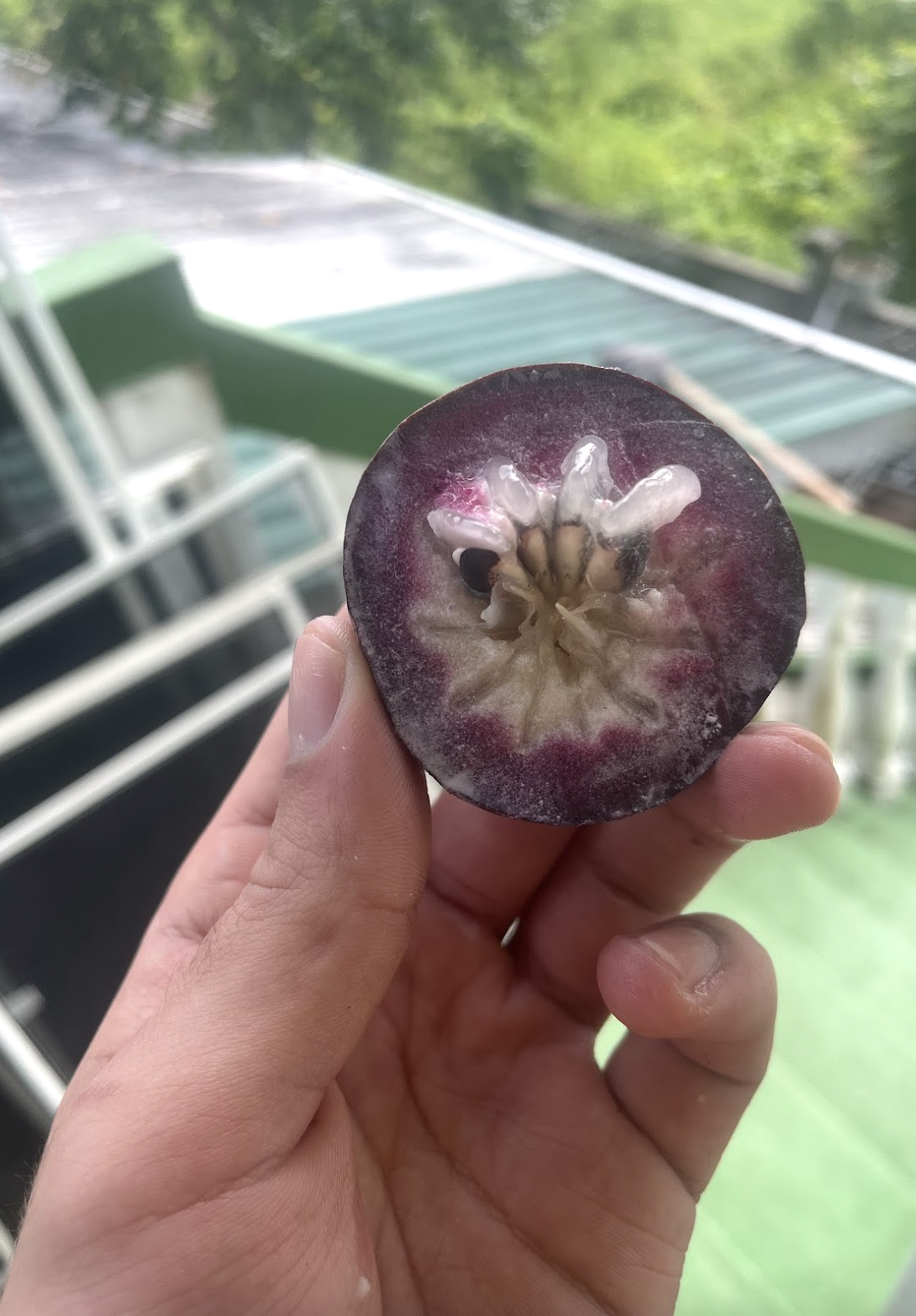
We learn to respect fruit more when it lives in our backyards, enhancing our botanical intelligence outside the classroom. Nana Mikey’s farm, barely an acre, bears guava, guinep, banana, star apple, plantain, coconut, cassava, eddo, poi bhaji, wiri wiri peppers, ginger, turmeric, breadfruit, broad-leaf thyme, and karela. He’s their steward, their caretaker, and their employee.
“Dem plants don’t need me to survive. I need dem to give me fruit to live. Der (they’re) the boss, and meh just collect meh paycheck.”
Food is Sentient
In Guyana, food is not merely fuel; it is an independent, conscious organism with which humans can only hope to live in harmony. As Nana Mikey says, the foods tell us what they need when—we just have to listen:
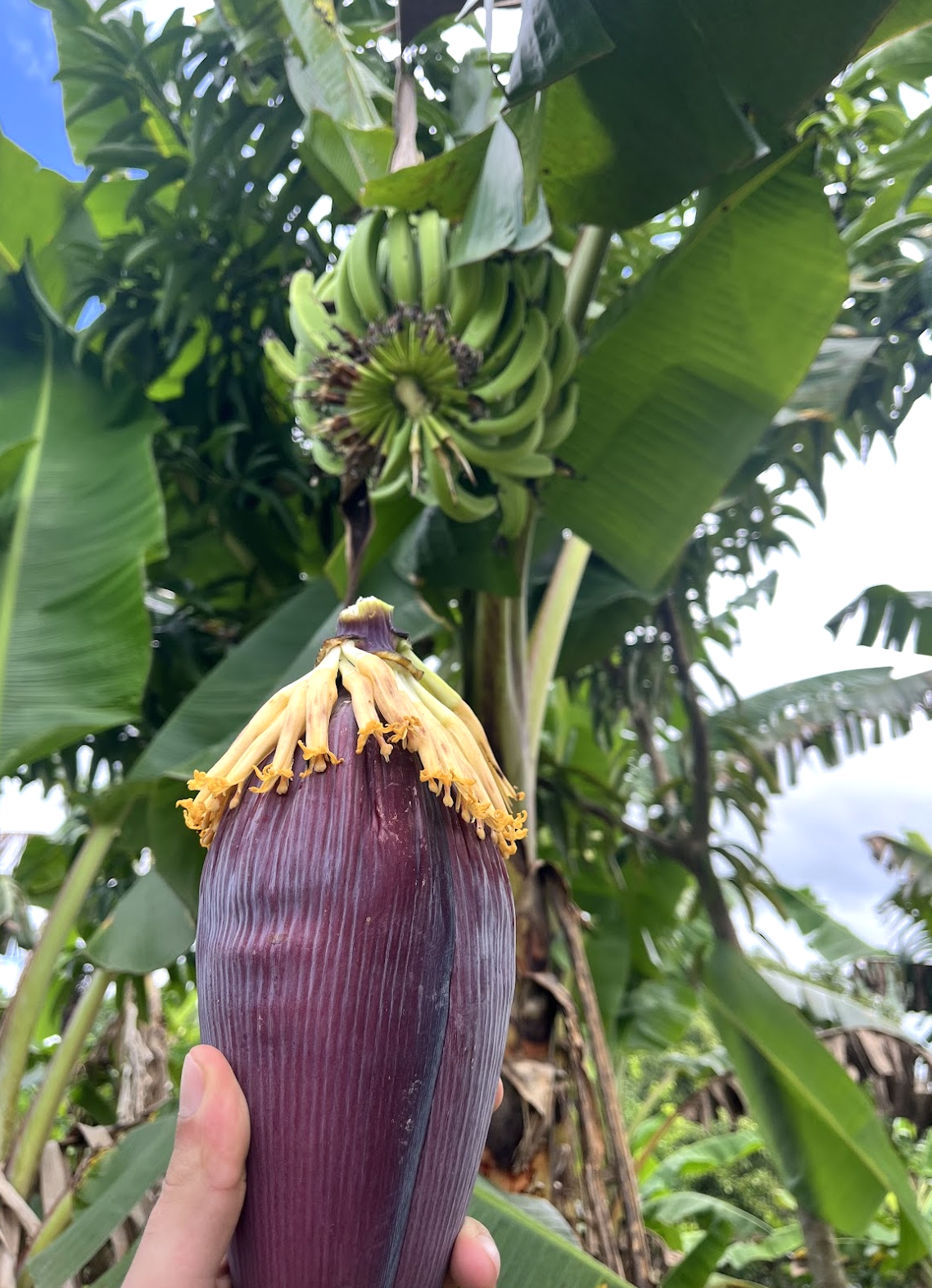
“The plantain is begging to get cut,” he points to the empress purple flower drooping under plantain vertebrates. “It knows you can’t resist, and when you pick it, more fruit will bear.”
He does not prune the plantain flower to preserve energy or maximize yields—he simply responds to the tree’s temptation.
***
Driving through the East Coast back dams, where paved road dissolve to dirt paths and canals, Vickash pulls in to a temperate terra cotta home guarded by a singing parrot.
“Ayou wan coconut fuh drink? We nah sip noting whole day!”
Time to hydrate. Vickash’s Mamu (mother’s brother) grabs his machete while he sends Vickash to climb the coconut tree. After ascending the ladder made with spare wood from his bedroom extension, he begins twisting, not chopping, the mature coconuts.
“Da coconut tells you when e ready. If e lets you twist off, it has nuff watah to drink. If it nah twist, it nah matter how strong you are: it nah twist.”
We don’t simply pick the coconuts. They offer themselves to us when they are ready.
Mamu holds the coconut in his left hand and whips the machete straight through the top, releasing the delicious elixir hiding inside with one swift cut.
“We lucky the coconut chose us to be professional choppers,” Vickash shares as we scoop the jelly with the broken shell bits.
***
Plants even tell us how they want to be cooked.
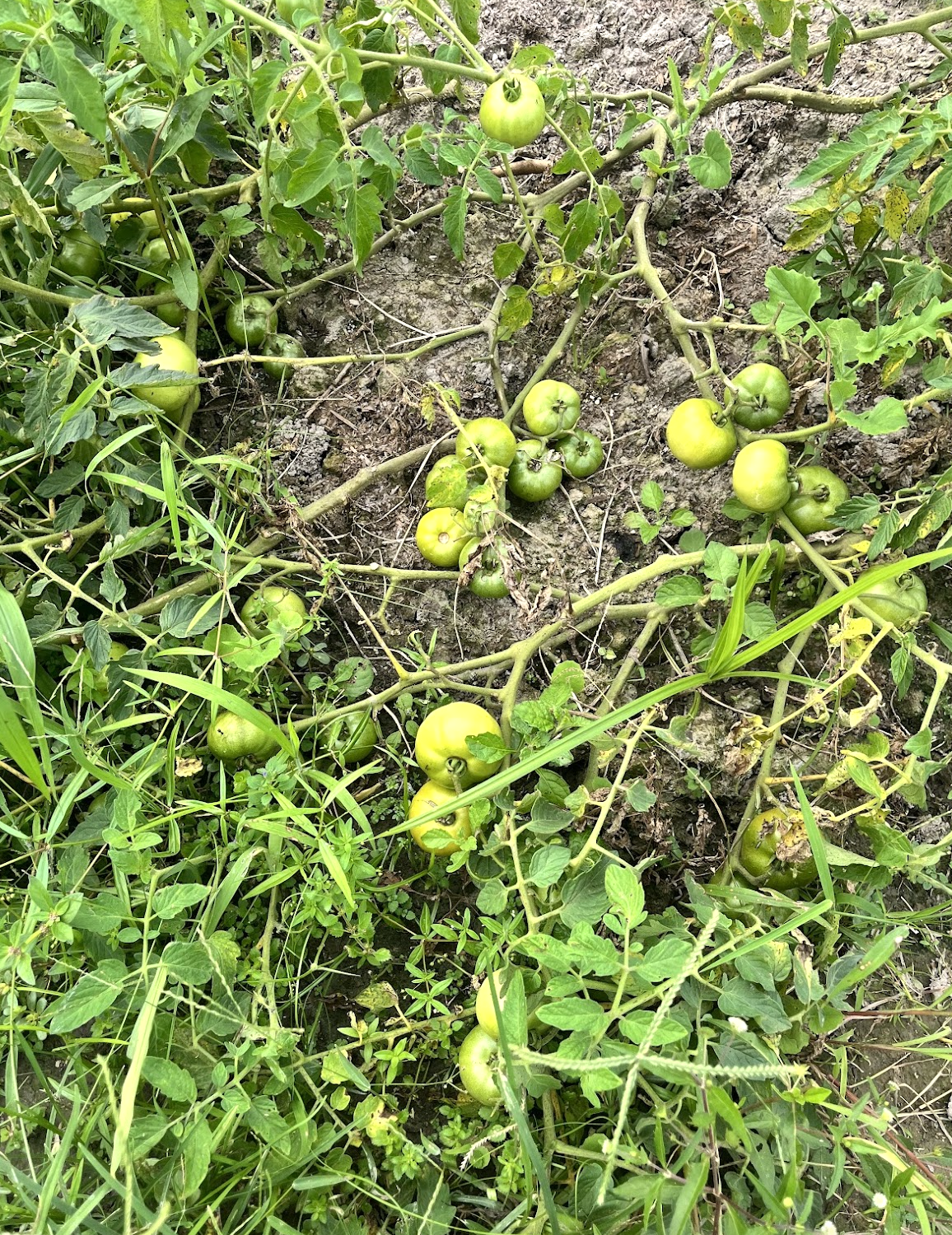
Wheelbarrowing through the crumpled clay of Nana Yankee’s farm, I noticed withered tomato plants bearing only green fruit. Rainy season has not arrived in full force yet, but farmers with decades of experience made early preparations expecting months of downpour. I feel sorry for Yankee’s low yield, but he doesn’t seem bothered.
“Irie (Alright), e chutney time,” he says with a huge, missing tooth smile on his face. “When tomato sour like so, people does like fuh cook it down with peppa, onion, garlic, lil touch geera (cumin), and it go eat real rice with piece fish and rice.”
Low yields are a market demand opportunity, not a disappointment.
We back bend for a few hours, collecting every last green tomato the thirsty vines will offer us. Yankee sends me to pluck and chop the chutney tomatoes while he hunts some onion. Nani Morlene prepares the karahi and crushes dried geera seeds. In minutes, a failed harvest becomes a celebrated side dish the whole village will enjoy.
***
Plants also do plenty that humans cannot.
Rocking slightly in the hammocks, we plate up our tomato chutney with some cuirass curry and basmati rice before gaffing (chit-chatting) about the days work. Nani Dovie has joined us in the backyard for a meal, but, per usual, she has a lot to say.
“Meh so sad fuh see sahjan (moringa) tun hard pon dem tree. Sahjan is a genius—it cleans arteries, mek you blood strong so you cholesterol stay down and you body stay cool.”
My bachelor’s degree in nutrition taught me vitamin K promotes vasodilation to cool the body, but it didn’t teach me that sahjan is the genius pod that drives the whole process. My grandmother, who was told by British admirals to stop attending school at age 12, holds ivy league nutrition knowledge thanks to Professor Sahjan.
Sahjan does not simply contain these nutrients—it knows how to care for the body in a way humans cannot. Admitting what we can and cannot do is step one to living symbiotically with our environment.
With Trees Overhead, We Know We Are Not Above The Ecosystem
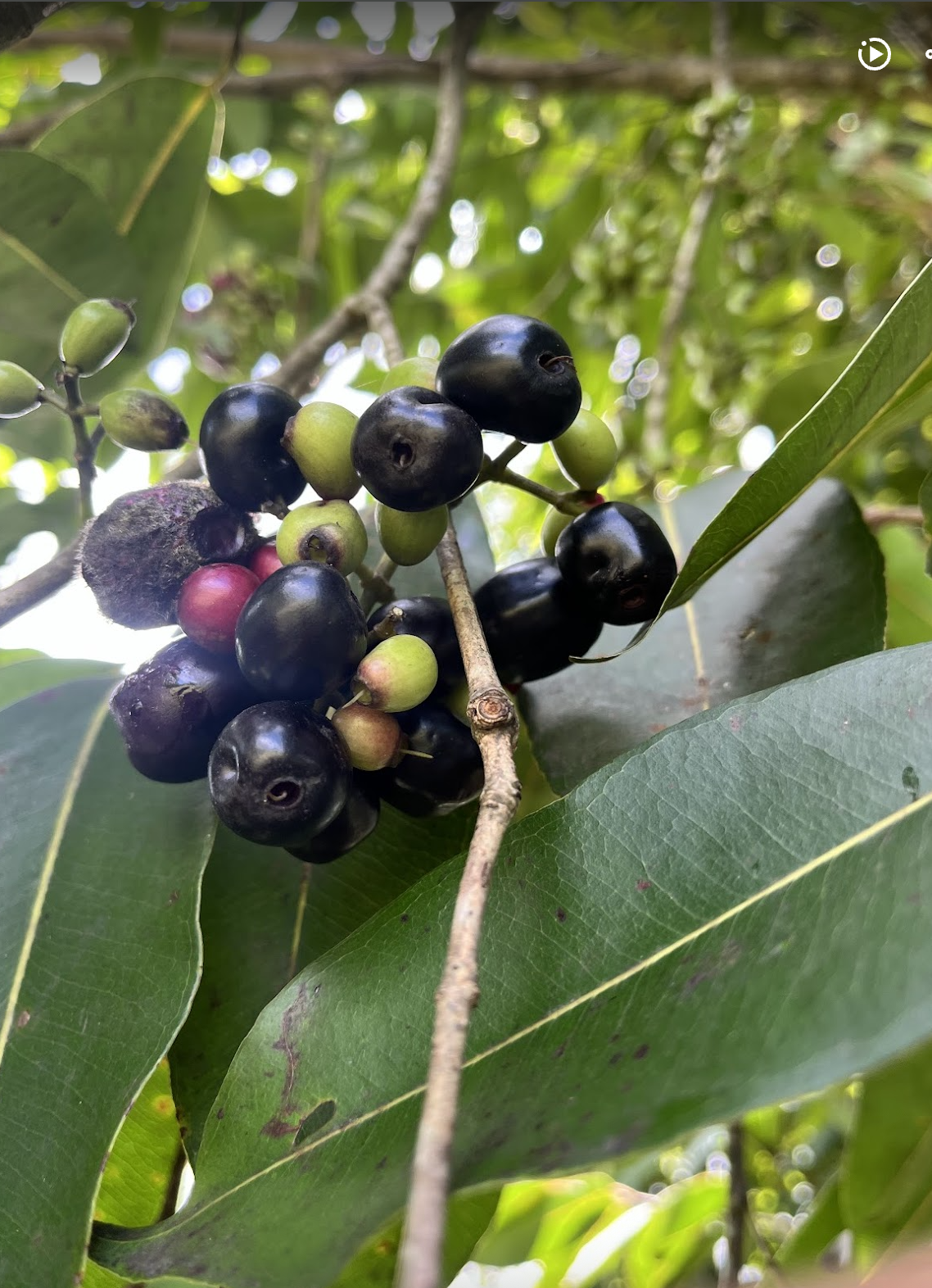
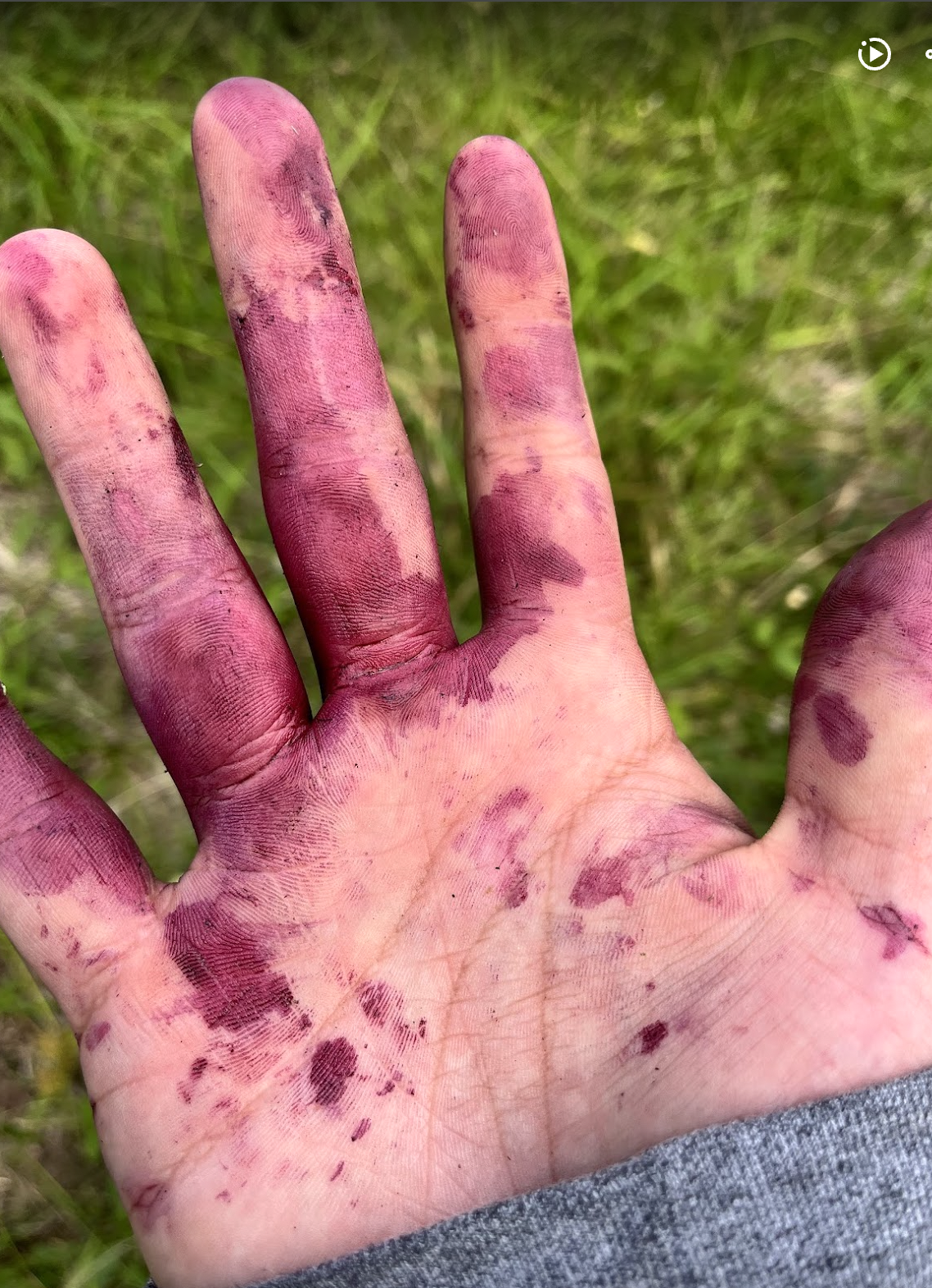
While eating jamun, a cardamom-flavored berry, I complained that birds had already pecked at the ripest fruit.
“The birds won’t wait for you to wake up to feed their young,” Nana Mikey replied. “And the worms and fungus will happily lap your leftovers.”
We are not owed first pick.
“I’m sure the labba and lizards will be happy with your unused cashew fruit,” Nana added. “There’s no such thing as waste on the farm.”
The Guyanese learn this from small, as mango trees are our baby mobiles. We are born into abundance thanks to our fertile lands. They are our first teachers.
Walking down the canals with my toddler cousins, we stumble across a tree full of yellow-brown pods, resembling the poisonous Black Locust I’ve learned to avoid in the Northeast U.S. Arianna, all of 6 years old, runs up to the trunk, violently shaking till pods fall to the ground.
“Whiteeeeeyyy!!!! E finally ready!” she squeals in delight, eager to crack open the pods I’ve been taught to avoid.
“Don’t tell Mami; she said we’re not allowed to have ice cream before dinnah.”
I’m puzzled as she bites down on the dried pod to reveal a fuzzy flesh that tastes like vanilla ice cream, rightfully earning it the colloquial name “ice cream bean.”
“Whitey keeps you full and stops you from getting sick,” she, once again, informs the college-educated one between us.
After sneaking her delicious pre-dinner treat, she gnaws on the skins, masticating them to compost better. This attracts fungus that leaf-cutter ants adore, encouraging them to bore the soil and create tunnels for water storage.
Guyanese children understand what industrial agriculture does not: diversity is protection. Birds, insects, fungi, and burrowers do not threaten the harvest—they make it possible. Where commercial farming pits humans against nature, a gambler’s wager against drought, blight, and infestation, subsistence farming recognizes kinship across species.
We Build Houses with the Same Plants We Eat
Nature’s friendship taught the villagers to share. Neighbors exchange fruit like currency. Nana Mikey and I spot a tree overflowing with ruby red rambutan, but it’s across the property line. We pack a bunch of sour fig bananas to bring to the neighbor.
“Bernard, meh brudda. Meh come with some ripe banana hoping you can spare some rambutan,” Nana Mike proposes.
The farming men stand, hands on hips, debating whether the rambutan is ripe enough to eat. Yes, it is soft enough to consume, but Bernard is set on waiting one more day to let the sugars mature into their rose aroma.
Bernard notices the charcoal gray clay clinging to Mikey’s hands. “You been a pull and plant cassava today? Ya know cassava like the dry weather and just now rain a come.”
Mikey counters, “Mahn every year rainy season come latuh and latuh. The crops run dry and I need to eat, so I plant meh cassava now to eat by end of February.”
They continue exchanging their farmers’ insight, trading stories from the last decade of how thick the cassava grew, how long you have until it spoils, whether they should trail the oxen to collect manure for the papaya trees. They attempt to predict the next rainfall, having seemingly memorized this year’s almanac.
Bernard invites us in for rum and charred karela with roti. We pass around the sweet, nutty flesh of the charred bitter melon, enjoying old farmer tales while the blue-gray tanagers sing and the rambutan continues to ripen. I leave, tan and happy, with bags full of mangos, mustard, and onions.
***
I hop in a drop car for 200 Guyana dollars (1 USD) and return to Albion Village. The scene at Aunty Kamini’s house is not so different: her fireside whispers blue flames and red ambers, a cauldron-sized steel spot bubbles with fish curry, and friends debate the best ratio of lemon to orange for fish washing. Kamini insists that the snapper I bought this morning pairs best with lime and garlic.
Her daughters prepare provisions while Uncle Avinash twists coconuts to chase our rum. I skin the mango and stir a pot full of mustard and wiri wiri pepper sauce into a sweet pickle sensation. Nani Dovie picks bay leaves to perfume the rice. After 8 hours of blazing tropical sun and a quick karela break, our village of 10 enjoys the fish Uncle Gano caught at 5 am, prepared with all the aromatics and garnishes from our soil. Our morning worries slip into the evening breeze.
The Silent Protest
As Exxon-Mobil brings job opportunities, fast food, and canned products, more urban Guyanese turn to imports over local foods, soiling the integrity of the plant-to-person relationship.
Foreign foods flown in for oil workers symbolize modernization. Plastic Pepsi bottles infiltrate the water cycle, damming the canals faster than the waste management can adapt. Fruit mountains at Stabroek Market reduce to putrid liquid when locals fill up on white bread and tinned sardines. KFC drive-through lines stack traffic to the back dam.
I asked Nana Yankee, “Why do the people in GT (capital city) wait in line for KFC when Guyana has such beautiful fruit and fresh fish and game everywhere?”
Spirit sinks from his eyes as he turns to his soil.
“Fuh me, the fruit is de easiest ting to eat. It’s the fuss (first) thing meh see when meh wake. Why would I drive down de road to KFC for some drugged-up chicken? But for people in GT, KFC is de fuss ting dem see. Going der means you got money and you too good to cook. Dem raduh stare at a computer than dig hands in de soil. Dem wan to build up the country with malls and offices. Dees people don’t have time to till land, plant, harvest, and cook, so dem want the easy way, de American way. And just like de Americans, dem pay good money for food while dem don’t notice all the coconut running dry and de baingan (eggplant) spoiling at de feet.”
Cheap food is healthy food. Fresh vegetables fall from the trees as fish swim upstream into family backyards—dinner for free. But the Guyanese want to be respected as developed, not developing people, and that, to many, means eating the sodium-preserved, ultra-industrial imports spoon fed from the imperial overseers.
A country historically plagued by malnutrition and starvation now experiences obesity, diabetes and heart disease epidemics. Deforestation and industrial construction threaten our carbon negativity. The younger Guyanese generations unlearn our traditional recipes when they turn to Burger King and KFC. Farmers struggle to sell their yields because of the decreased demand for local food. The Americanization of Guyana disrupts connection between body, land, and community by dismissing Guyanese values as primitive.
Guyana’s farmers are now the gatekeeper to our ancestral practices, the foodways that enabled us to endure kidnapping and colonization. But farmers face their own array of misfortune: from droughts to disinterested buyers, their livelihoods rest in food trends determined by foreign powers. Farming families turn to what has always been there for them:
When the people do not know what to do, they go to their land.
***
Nana Yankee nearly tumbles into the canal as he rises from the Bok choy beds. Just one month back from his renal bypass, I worry that he shouldn’t kneel in this jungle heat.
“This is keeping me alive,” Nana Yankee insists. “I’ve had a heart attack. I’ve been paralyzed. But I never have trouble walking this farm.”
Nana’s water bill runs up to 300 USD since rainy season refuses to come. His tomatoes won’t redden and his summer squashes barely feed the fruit flies. Yet he wheelbarrows to the back dam each day, determined to feed himself and his neighbors.
“To be one with my land is to be alive. I’d rather drop dead than leave all this.”
He picks a fresh papaya for us to share. The mild melon flavor clears the dust settlements in my throat. We spoon the flesh into our thirsty mouths, looking over the horizon for harpy eagles and hover jets. We discuss how lucky we are that our land was not attacked today.
Bombs may fall. Regimes may rise. Exxon may drill. Canals may run dry.
But people will plant okra and bora. They’ll pick whitey from the neighbors’ tree and invite them to lime* with a plate of duck curry. They’ll watch the sunset and awaken with its rise, grateful for another day to watch the rambutan ripen.
*liming, by definition, means to do nothing with company, but actually encompasses much more. To lime is to be present with loved ones, enjoy company without a task or structure, conversing as desired, often with food (and rum) to accompany the gathering