
Black Hair Care and Land
This post was written by Asia Anderson as a part of her 2025 Lazarus Summer Internship.
I’ve spent a lot of time thinking about how I can make my hair easier to tend to. Which styles might save me 20 minutes before class each morning, and whether I might be able to make my braids last between the first day of classes and Thanksgiving break. I was envious of my peers who had never budgeted two hours each Sunday to wash and coil their hair, or eight hours on a Wednesday night to get a new style.
After my first working day on the Farm, I was faced with a new dilemma. Between the walk up Prospect Street and prepping fields for new crops, I was certain my hair wouldn’t be able to withstand the conditions of the Farm. Two hours turned to four hours that week as I tried to anticipate any challenges I might meet in the weeks to come: thicker creams, stronger gels, longer drying times.
I wondered how others managed it—how many Black people, even 400 years ago, without diffusers or hair custards, prepared their hair to weather each of the four seasons on a working farm or plantation. What practices persisted through long and arduous trips across the Atlantic, and which ones could not survive the soil conditions of a new land?
Black enslaved peoples brought okra seeds from West Africa into the Southern United States. Southern slave owners loved the thick and viscous texture of the vegetable, and began to use it as a thickener in their soups. It was one of the few crops that could remain in a slave’s garden, and it carried a lesser known legacy of being used to condition and soften the very curly hair of many African and Caribbean people. While personal care often included herbal and natural fixes, Black hair care in colonial America specifically became an issue of time and convenience.
The time that many African people had used to braid and nourish their hair seemed incompatible with the new living conditions they now faced in America. As more generations were born into enslavement, traditions were lost, along with much of the knowledge of how people might use the seeds their families brought overseas to care for themselves. It wasn’t until the two natural hair care movements (50s-70s, 2000s) in the United States that Black people considered that knowledge a necessary part of hair care.
During that period there was a slow and steady shift from hair control to hair care. This was the guiding question of my research project. How did people, especially black and brown people, return to the use of the land to nurture their hair during this shift?
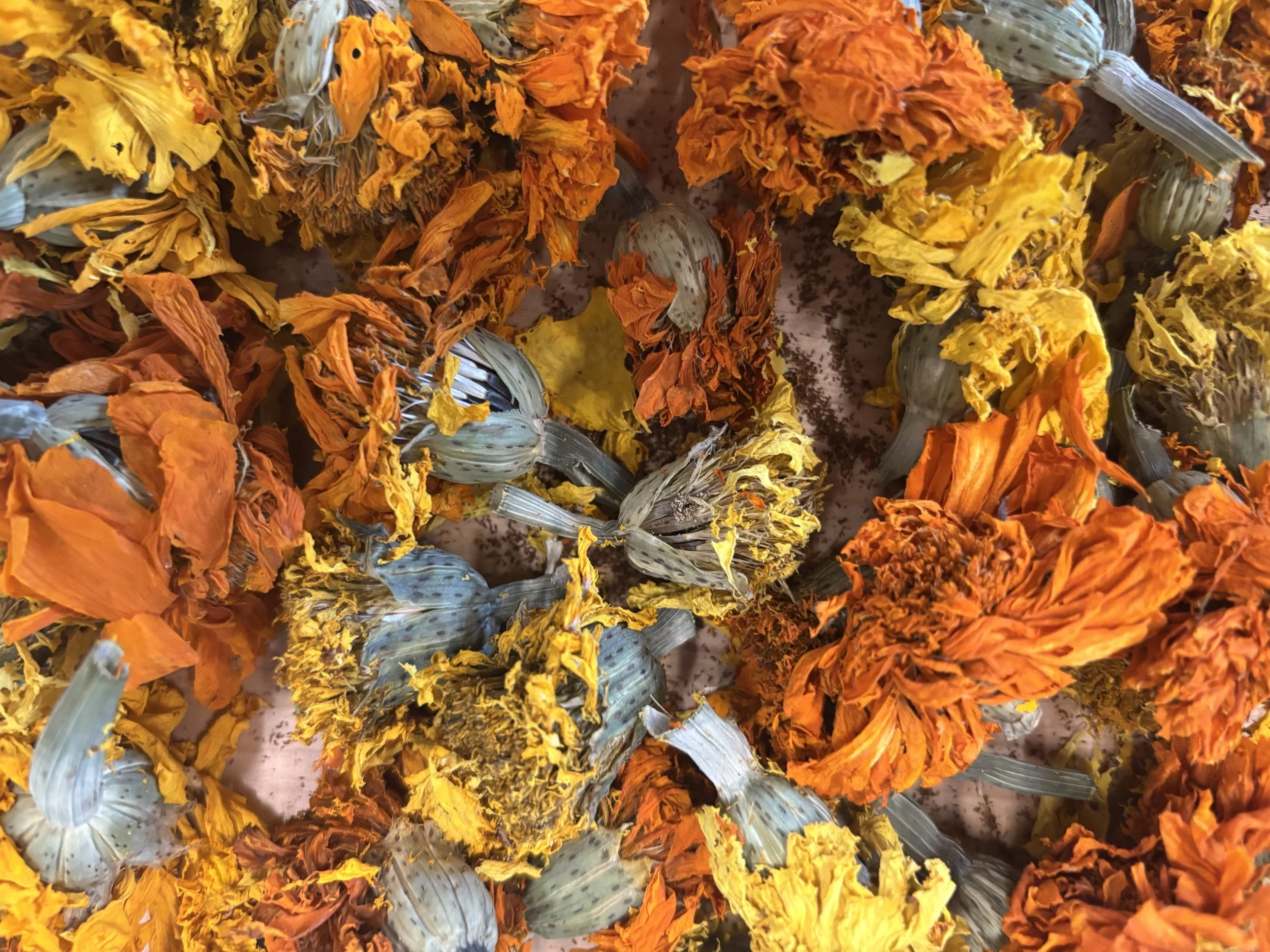
Okra was the base material of the first natural hair care product I created throughout my Independent Project — a hair mask that also includes oat, roselle (hibiscus), and rosemary. African shea was the base of another — a hair and body butter that also includes beeswax, castor oil, calendula (marigold), and oat.
Through this project I hoped to reframe my outlook on my own hair care this summer, seeing the farm as a resource, rather than an obstacle.