
African Diasporic Ecological Knowledge and Regenerative Agriculture
This post was written by Ta’ah Baxter as a part of their 2025 O’Shaughnessy Global Food Fellowship.
The First Seeds of the Journey
My goal was to research African Diasporic ecological knowledge on small to mediumsized farms to deepen our current understanding of sustainable/regenerative agriculture. My research project investigates, How does African Diasporic Ecological Knowledge (ADEK) in terms of agrarian techniques, show up in regenerative or organic agriculture growing practices today?
I kept a sharp eye out for sustainable practices such as crop rotation, soil management, and the use of biochar. Over these three months, I gained a great deal of knowledge on the importance of cultural identity, ecological practices, and community care. Visting farmers in both rural and urban spaces, many of them, to my surprise, were happy to have the chance to discuss their work and ideologies. I deeply listened to their stories, experiences, and histories that are deeply tied to land, resilience, and community. Many of the African Diasporic farmers, shared that they weren't farming for lavish income—they were farming for community resilience, sovereignty, and connection to their ancestors and the land.
Culture Preservation
Farming is never just about soil and crops—it is about culture, memory, and the stories we carry through the land. Traditional Ecological Knowledge (TEK) is a form of knowledge that is placebased. We can tie all living things in a relationship with one another. Among the Gullah people, Gullah is a language, is songs, is blood, is kin, self-sufficiency, and more. The Gullah culture an also sometimes give rise to guiding practices around farming, growing, and harvesting food and medicine. From my research, practices such as no-till, no harvesting in certain months, use of manure, and planting with the moon have come to light. Today, these practices are fading on a large scale farms, but on small scale farms, they can be blended with Gullah song, storytelling, and land blessings. Farmers, Seed keepers, and Herbalists have become one of the many cultural preservers of the Gullah way, knowingly and unknowingly. One cultural preservationist I interviewed, reminded me that , ‘As a people, we don't like to commodify our culture; instead, we share it, and that has both positive and negative consequences.’ Their wisdom made me think about the spaces that Salessie Atadika is creating, where we can have more ownership of our culture economically and use it as a bridge to preserve and uplift identity. It struck me that culture is as much a food as tomatoes or rice—it must be planted, tended, and passed down. It nourishes the mind and ways of life. Preserving farming practices can be akin to preserving ourselves.
The Impact of the Green Revolution
As I listened to farmers speak about their practices, one theme kept returning—the rupture caused by the Green Revolution. The introduction of chemicals like Roundup promised efficiency but came at the cost of losing cultural and ecological knowledge. Farmers were told these products were modern solutions, but it stripped the soil of its health, created health issues, and replaced ancestral practices. Dr. Vandana Shiva writes about the loss of practices and cultural shift in farming in India to the green revolution, and it seemed that there was a resonating echo of a similar loss in the Americas. The green revolution didn't just change farming—they changed the relationship some farmers had with thier previous cultural ways, devaluing community-based systems and incentivizing capitalistic values. During this research, I realized that some farmers are not farming as their great-grandparents did, but instead adapting under pressure from external forces. The Green Revolution was marketed as progress, but it also contributed to the erosion of cultures, land, family, community-based farms, and biodiversity everywhere. Yet in my research, I saw farmers and culture keepers resisting, choosing more sustainable paths, and sometimes reclaiming more ancestral methods.
Market Access
Many of the smallholder farmers, weren't just dealing with climate change and consistent resources; they were also dealing with market access, which highlights who gets to sell, where, and at what scale. Several farmers relayed attending farmers' markets was not worth it due to the cost of transportation and materials, in addition to class and racial pressures. They wonder If customers valued their food just as much as their white counterparts? And if their value of labor for the food is seen differently. One farmer said, ‘I have been going to farm stands for years, and one of my top questions I get is, ‘Did you grow this food? Where did you get the produce from?’ As if people are surprised that I am a farmer with my own farm and willingly doing the labor to grow produce.’
Some farmers told me they changed gears in their business models. Instead of relying on farmers' markets, where the overhead costs were too high compared to customer demand, they turned to other types of markets, such as direct-to-consumer sales, workshops, and online sales, to increase visibility.
Dreams of Scaling Or Not
When asked about scaling and long-term planning, many farmers told me they weren't interested in becoming massive suppliers for national chains; they just wanted to be part of those value chains. Their goals were local integration (from county to state level), improving market access, and providing for their various communities, especially those with limited resources. Scaling for them meant tailoring the variety of crops to community tastes, local manufacturing, cooperative farming, and sustainable practices. Selling to Whole Foods or larger store chains was not out of the question, but the hurdles of cleaning, sorting, and bulk aggregation were ambitious for a single farmer. Collective organizing for local manufacturing enabled them to have more purchasing power, equipment, and bulk aggregates to meet demand. Farmers know that scaling can bring more money, but also more stress, less control, and a greater compromise of their values. While the cooperative scale was slower, it was the more sustainable route to take.
Digital Adaptation and Online Markets
Farming may be a practice that dates back several thousand years, but some of the farmers I met are adapting to the digital age. Social media has become a vital tool for visibility, with farms gaining traction by sharing their stories online. Online markets, deliveries, and niche products are becoming revenue-distinguishing lifelines. Some farmers told me they were reluctant at first, but once 2020 hit, they didn't have a choice. Digital tools, such as an online sales platform, enabled them to reach consumers easier, while also catering to older people and people with disabilities in their community. While these adaptations do not erase systemic barriers, they do open doors. Farmers are strategizing to coexist in both the physical environment and cyberspace.
Cooperatives and Community Power
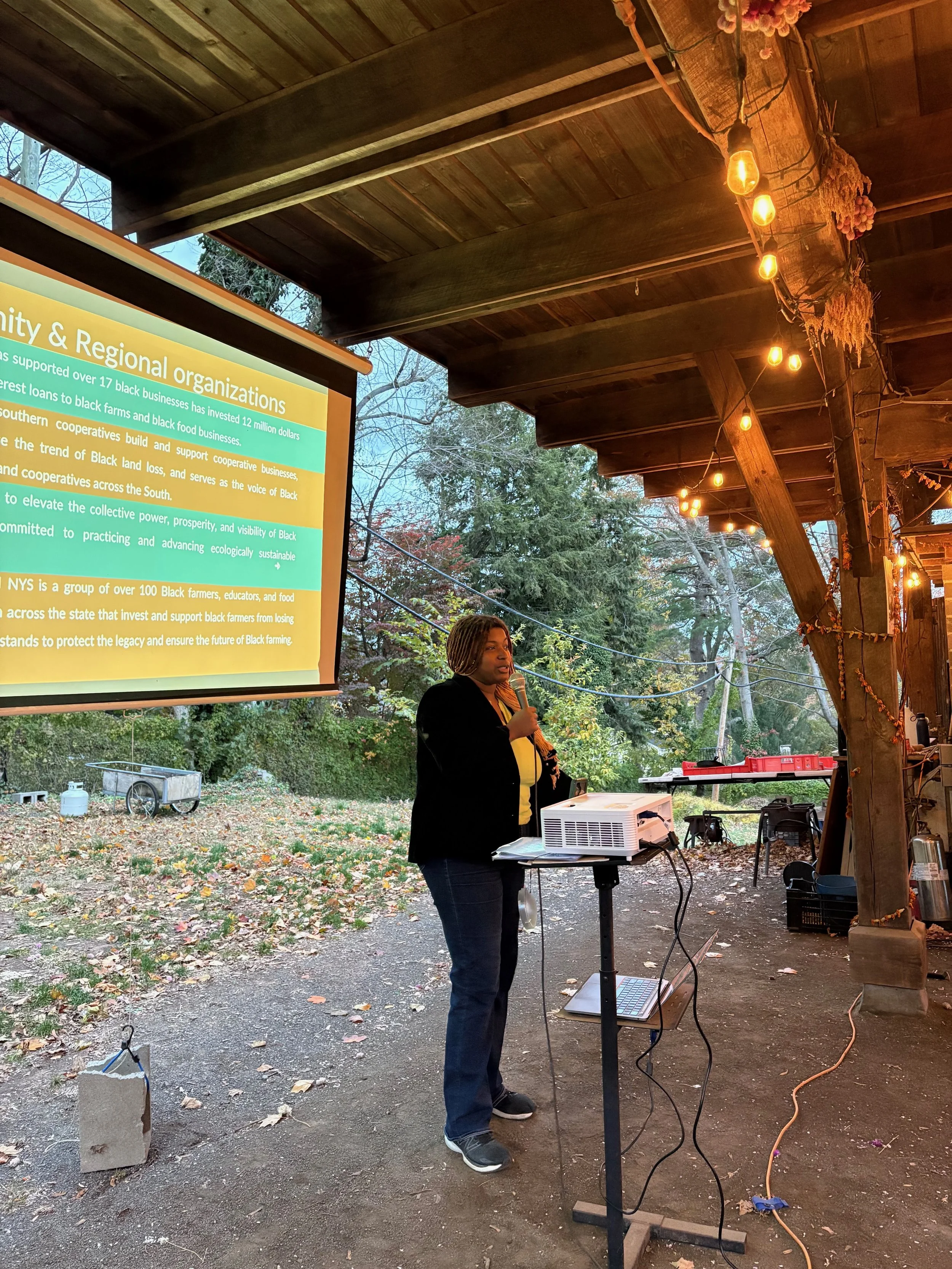
If there's one theme that echoed across my research, it is community. Farmers often spoke about cooperatives—not just for selling, but for living more communally, purchasing supplies, sharing ideas, resources, and equipment, helping in natural disasters, and processing crops. Cooperative models enabled them to access cleaning and sorting stations, allowing for the processing of larger volumes and securing larger contracts. Some dreamed of employee-owned processing hubs, where farmers could be more a part of the decision-making and reduce loss of future ownership. Farmers know that the era of working a 50-acre farm alone is long gone; working in a cooperative sense is both practical and cultural, echoing traditions of shared labor and collective responsibility.
Closing Reflections – The Harvest of Stories
As my three months of research drew to a close, I realized I had gathered seeds of wisdom. These farmers taught me that agriculture is not just about soil and plants, but about history, community, politics, and identity. They showed me that markets access is a still a struggle and that the USDA is still on shakey grounds. They reminded me that resilience is not a choice, but a necessity for marginalized farmers. I saw the hope in cooperatives, innovation in digital spaces, and strength in cultural continuity. Every farm visit left me humbled by their persistence in the face of systemic barriers. This project was never just about answering research questions; it was about witnessing lived truths. Black farmers are not only navigating the multitude of histories, but they are also working the land in the ways they know how. They are preserving dignity, culture, and future possibilities. Their stories are a harvest, one we all benefit from.