
This post was written by Mary Shamon Ayala as a part of the 2026 Lazarus Summer Internship.
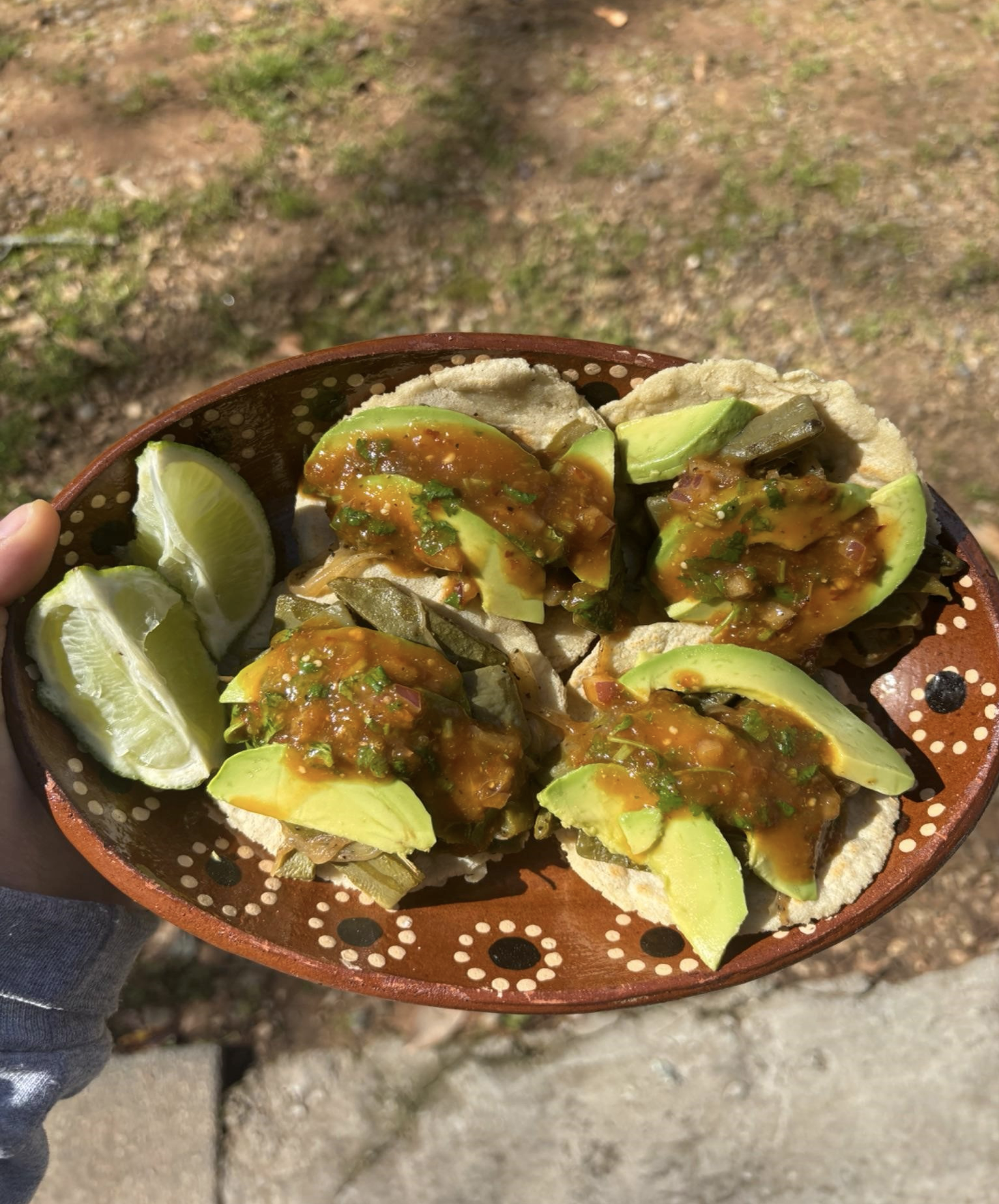
The kitchen in my grandmother’s home in Morelia, Michoacán, has always carried its own rhythm. The sound of tortillas warming on the comal, the smell of garlic and lime filling the room, and the quiet simmering of beans on the stove are memories that have followed me long after leaving Mexico. At the center of the table is a plate that feels familiar: blue corn tortillas, frijoles de la olla, nopales sautéed with onions and tomatoes, and roasted chicken seasoned with ingredients passed down through generations.
Growing up, I saw this meal as a reflection of my family and culture. I did not realize it also carried lessons about health.
My grandmother has lived with Type 2 diabetes for years, yet food has always remained connected to her culture. She does not describe beans by their fiber content or nopales by their role in supporting blood sugar regulation. She simply cooks the foods she has always known, the foods her mother cooked and the foods that have nourished her family for generations. Looking back, I realize my grandmother was teaching me about health long before I learned the language of public health.
This summer, through my work with the Yale Sustainable Food Program and my volunteering at HAVEN Free Clinic, I began to understand that food represents much more than nutrition. As an electrical engineering student interested in developing medical devices, I often think about health through technology. I imagine tools that detect disease earlier, improve patient care, and help us understand the human body.
My experiences this summer pushed me to think about what happens before someone enters a clinic. Health is shaped by the environments we live in, the food systems around us, and the resources available within our communities.
To understand health, I had to look beyond the patient.
I had to look at the plate.
One of the first ingredients I began seeing differently was corn.
At the Yale Farm, we planted the Three Sisters: corn, beans, and squash. Before this experience, I thought about crops as individual plants growing beside one another. The Three Sisters introduced me to agriculture built on connection. Corn provides a structure for beans to climb. Beans add nutrients to the soil. Squash spreads across the ground and helps protect the plants above it. Each plant contributes something that supports the others. This relationship reflected a larger lesson about sustainability. Healthy systems depend on balance and cooperation.
Our visit to Pequoig Farm, an Indigenous-led farm in northern Massachusetts, deepened this understanding. Learning about Nipmuc food sovereignty, self-determination, and land-based education showed me that food carries history and identity. In 2022, 181 acres of land were returned to Nipmuc stewardship through a partnership with The Farm School. This allowed the Nipmuc community to reconnect with traditional foodways and practices such as cultivation, hunting, foraging, medicine-making, and ceremony. Pequoig Farm showed me that food is connected to cultural renewal and community health. Growing food is not only about producing ingredients. It is about maintaining knowledge and relationships that have been carried across generations.
I thought about my grandmother’s kitchen.
The corn on her table was never just an ingredient. It represented a connection between people and land, between past and present, and between generations. The practices I once viewed as family traditions were also examples of care and knowledge.
The second ingredient I return to is the bean.
Beans have always been a quiet presence on my family’s table. They are humble, familiar, and often overlooked, yet they carry generations of knowledge. In my grandmother’s kitchen, beans were never something that needed explanation. They were simply part of the meal, prepared with patience and care.
This summer, I encountered beans again, but this time with my hands in the soil instead of reaching across the dinner table.
During a Friday open work day at the Yale Farm, my fellow Yale interns and community members gathered to plant the second of the Three Sisters: beans. As we worked, a community member shared her knowledge of food history. She told us stories about corn, wheat, baking, and the histories carried through everyday ingredients.
She reminded us that food has a story before it reaches our plates.
She had brought homemade cookies to share. Sitting beside the garden beds, she offered us both food and stories. I remember thinking about how much knowledge can be carried through something as simple as a shared meal. The field became a place where people of different ages and backgrounds exchanged experiences and learned from one another.
That afternoon reminded me of my grandmother’s kitchen, where knowledge was rarely written down. It was passed through conversation, observation, and participation. Communities preserve knowledge through the people who choose to share it.
The third ingredient I return to is the nopales.
Nopales have always reminded me of home. They are familiar, resilient, and transformed through careful preparation into something nourishing. Before this summer, I mostly thought about food from the moment it reached my plate. Through the Yale Sustainable Food Program, I began thinking about everything that happened before that moment.
Food begins long before it reaches the kitchen.
During Tripp Balch’s beekeeping workshop, I was reminded of how many relationships exist within food systems. We had the opportunity to see bees up close and look inside their hives, observing the careful organization of a community that is often invisible to us. Seeing the hive as a living system changed how I thought about the many organisms involved in food production.
The food we eat depends on relationships that are easy to overlook. Pollinators, soil, plants, farmers, and communities all contribute to bringing food to our tables. These relationships shape the health of the environments and communities that depend on them.
This experience expanded my understanding of public health. Health does not begin only inside a clinic or within the human body. It is shaped by the conditions surrounding us. The air quality that farmworkers experience, the soil where food grows, and the organisms that support agriculture all influence the health of communities.
The lessons I learned about food systems extended beyond the farm. They became visible in the ways food moves through communities.
During our visit to Common Ground, I saw how agriculture can become a place for education and community engagement. The farm was not only a place where food was grown. It was a space where students learned about agriculture, environmental stewardship, and the importance of understanding where food comes from.
Seeing high school students engage with the farm reminded me that food education is not only about teaching people what to eat. It is about helping people build a connection with food and understand the systems that shape their health.
Our work at the Yale Farm allowed me to see another part of the food system when we donated lettuce and sugar snap peas to the Downtown Evening Soup Kitchen. I thought about the journey of those vegetables. They began as seeds placed into the soil, cared for by many hands, and eventually reached members of the New Haven community.
The produce represented more than nourishment. It represented care shared between people who grew food and people who received it. This experience changed how I understood food access. Access is shaped by culture, resources, time, and the ability to connect with foods that support health.
This understanding became especially meaningful through my work at HAVEN Free Clinic. In the Education Department, I worked with patients managing high A1c levels and saw that conversations about nutrition extend far beyond individual choices. Food decisions are shaped by family traditions, schedules, resources, and the foods that carry meaning.
I often thought about my grandmother during these conversations.
My grandmother has managed her diabetes while continuing to cook the foods that connect her to her family and culture. The beans, nopales, corn, and vegetables that have always been part of her meals are not separate from her health. They are part of the way she understands nourishment and care.
My experience at HAVEN taught me that conversations about health should begin with listening. Supporting someone’s health does not mean asking them to leave behind their traditions. It means understanding the knowledge and practices already present within their communities.
This realization has changed the way I think about engineering.
As an electrical engineering student interested in developing medical devices, I still hope to create technologies that improve the diagnosis and treatment of disease. I remain fascinated by designing tools that help us understand the human body and support patient care. This summer reminded me that technology is only one part of health.
Before designing a solution, engineers must first understand the problem. They must listen to the communities they hope to serve and recognize the systems that shape people’s experiences. A device can measure a heartbeat, but understanding health requires looking at everything surrounding that heart: the food someone has access to, the environment they live in, the traditions they carry, and the people who support them.
When I return to my grandmother’s table, I see more than a plate of blue corn tortillas, frijoles de la olla, nopales, and roasted chicken. I see the farmers who grow the ingredients, the ecosystems that support them, the hands that prepare them, and the generations who preserve the knowledge behind them.
The plate has not changed. What has changed is how I see it.
This summer taught me that public health exists throughout our food systems. It exists in the soil where ingredients grow, the communities that share them, and the bodies they nourish. Every meal carries a story, and learning to understand those stories is part of building healthier futures.